Written and medically reviewed by Arnaud, Doctor of Pharmacy.
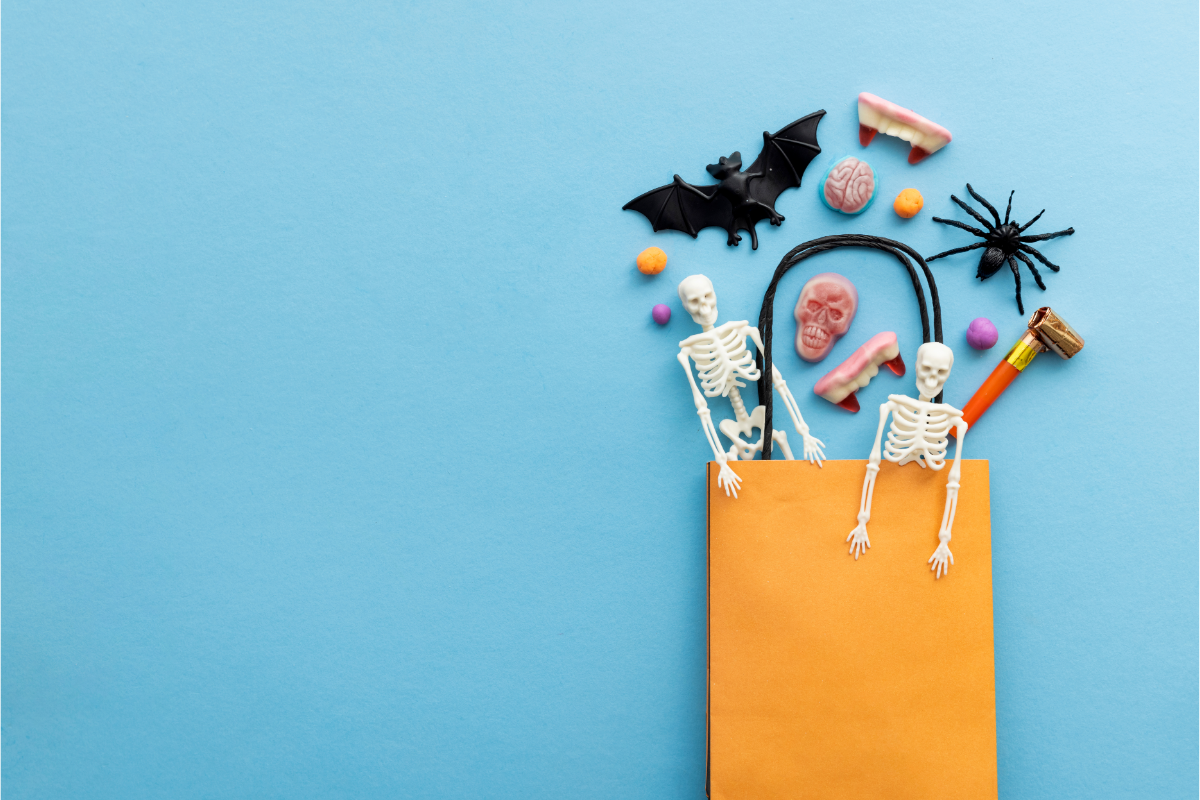
Halloween means candy, and for many families the October 31st haul lasts for several days. Treating yourself now and then is nothing to worry about: it is repeated sugar excess that takes a toll on health. This article reviews what studies say, gives simple tips for children and adults, and explains what you can — and cannot — expect from food supplements.
What does science say about eating too much sugar?
The World Health Organization recommends limiting free sugars to less than 10% of daily energy intake, and ideally less than 5%, for both children and adults (6). Here are the main documented points:
- Dental health: sugar is a major cause of tooth decay. According to the WHO, reducing sugar intake is one of the key levers for preventing it (3).
- Weight: in a randomised trial published in the New England Journal of Medicine, children who drank a sugar-free drink every day gained less weight than those who drank a sugar-sweetened one (2).
- Metabolic health: a high and regular intake of added sugars is associated with an increased risk of type 2 diabetes and cardiovascular disease (1).
- Mood: in a large Korean cohort, frequent consumption of sugar-sweetened soft drinks was associated with more depressive symptoms. This is an association, not a proven cause-and-effect link (4).
- Skin: excess glucose contributes to glycation, a process involved in skin ageing (5).
None of this is decided in a single evening. The aim is to prevent Halloween from stretching into several weeks of sugary snacking.
How can you stop children eating too much sugar at Halloween?
- Eat before trick-or-treating: a proper meal before going out curbs hunger and therefore the amount of candy eaten along the way.
- Set a simple rule: for example, a few sweets a day, eaten as dessert rather than as snacks throughout the day.
- Look after their teeth: brush teeth after sweets, and avoid candy at bedtime. Sticky sweets and lollipops stay in contact with teeth for a long time.
- Offer other treats to hand out: dried fruit, decorated clementines, small toys or stickers.
The food supplements presented below are intended for adults. They should not be given to a child without the advice of a doctor or pharmacist.
How can adults avoid too much sugar at Halloween?
Plan ahead and control portions
Buying the sweets to hand out at the last minute, and in the right quantity, avoids having a stock lying around the house. Serving treats in small bowls rather than from the packet helps keep things in proportion.
Combine protein and fibre
Eating sweets at the end of a meal, with foods rich in protein and fibre, slows the digestion of carbohydrates and limits blood sugar spikes. The protein snacks available at the pharmacy can help out, alongside a varied diet.
To go further, discover our tips to reduce your sugar intake day to day.
Can food supplements offset too much sugar?
No supplement can make up for excessive sugar consumption. For most of the ingredients promoted on this subject, no health claim is currently authorised at European level: the effects described below are a matter of research, not recognised efficacy.
Chromium
Chromium is a trace element. It is the only ingredient on this list with authorised claims: it contributes to the maintenance of normal blood glucose levels and to normal macronutrient metabolism. You will find it in our range of blood sugar supplements. For more on insulin-related mechanisms, you can also read our article on insulin resistance.
Nopal
Nopal is a cactus rich in soluble fibre and pectin. These fibres form a gel in the stomach, which is being studied for its effect on the rate of carbohydrate absorption. No health claim is currently authorised.
Acacia fibre
Acacia fibre is a well-tolerated soluble fibre that adds bulk to food and feeds gut bacteria. No health claim is currently authorised.
“Sugar blockers”
This term refers to supplements, often based on white kidney bean extract, presented as limiting carbohydrate absorption. No health claim is currently authorised.
Garcinia
Garcinia is a tropical plant whose fruit rind contains hydroxycitric acid, studied for its action on fat and sugar metabolism. Data remain limited and no health claim is currently authorised. It has no place in a rapid weight-loss approach.
What precautions should you take with too much sugar and supplements?
- If you have diabetes, never change your treatment and do not take a “blood sugar” supplement without talking to your doctor: some may add to the effect of medicines.
- Pregnant or breastfeeding women, people on long-term treatment: ask your pharmacist for advice before taking any supplement.
- Supplements are not a substitute for a varied, balanced diet and a healthy lifestyle.
Do you know the effects of too much sugar on health?
1. What is the link between excessive sugar consumption and type 2 diabetes?
a) No link
b) Sugar directly causes diabetes
c) Regular excessive consumption is associated with an increased risk
2. What best protects teeth after eating candy?
a) Drinking a soda
b) Brushing your teeth
c) Eating more candy
3. According to the WHO, what share of energy intake should free sugars not exceed?
a) 10%, ideally 5%
b) 25%
c) 50%
4. When is it best to eat your sweets?
a) At bedtime
b) As snacks throughout the day
c) At the end of a meal
Answers: 1-c, 2-b, 3-a, 4-c.
What questions do people ask about too much sugar at Halloween?
How many sweets can a child eat at Halloween?
There is no official number. The WHO recommends limiting free sugars to less than 10% of daily energy intake, ideally less than 5%. In practice, setting a small amount per day, eaten as dessert, stops the haul from turning into constant snacking.
Should you brush your teeth after eating candy?
Yes. Brushing after sweets limits the time sugar stays in contact with teeth. Sticky sweets and lollipops, which stay in the mouth for a long time, are the most harmful, especially in the evening.
Is eating too much sugar in one evening dangerous?
For a healthy person, an occasional excess has no lasting consequence. It is repeated excess that is associated with an increased risk of tooth decay, weight gain and metabolic diseases.
Do “sugar blocker” supplements cancel out too much sugar?
No. No supplement makes up for excessive sugar consumption. No health claim is currently authorised for sugar blockers. Only chromium has authorised claims: it contributes to the maintenance of normal blood glucose levels.
When should you ask a pharmacist or doctor for advice?
Before taking any supplement if you have diabetes, are pregnant, breastfeeding or on long-term treatment. Also see your doctor if you have intense thirst, a frequent need to urinate or unusual tiredness, which may signal high blood sugar.
This information is general in nature and does not replace personalised medical advice. If you have symptoms, ask your pharmacist or doctor for advice.
References
- White JR. Sugar. Clinical Diabetes, 2018. doi:10.2337/cd17-0084
- de Ruyter JC et al. A trial of sugar-free or sugar-sweetened beverages and body weight in children. N Engl J Med, 2012. doi:10.1056/NEJMoa1203034
- World Health Organization. Oral health, fact sheet. who.int
- Park SK et al. Consumption of sugar-sweetened carbonated beverage and risk of depression. Scientific Reports, 2023. doi:10.1038/s41598-023-40194-6
- Zheng W et al. Research advances on the damage mechanism of skin glycation. Nutrients, 2022. doi:10.3390/nu14214588
- World Health Organization. Guideline: sugars intake for adults and children, 2015. who.int