
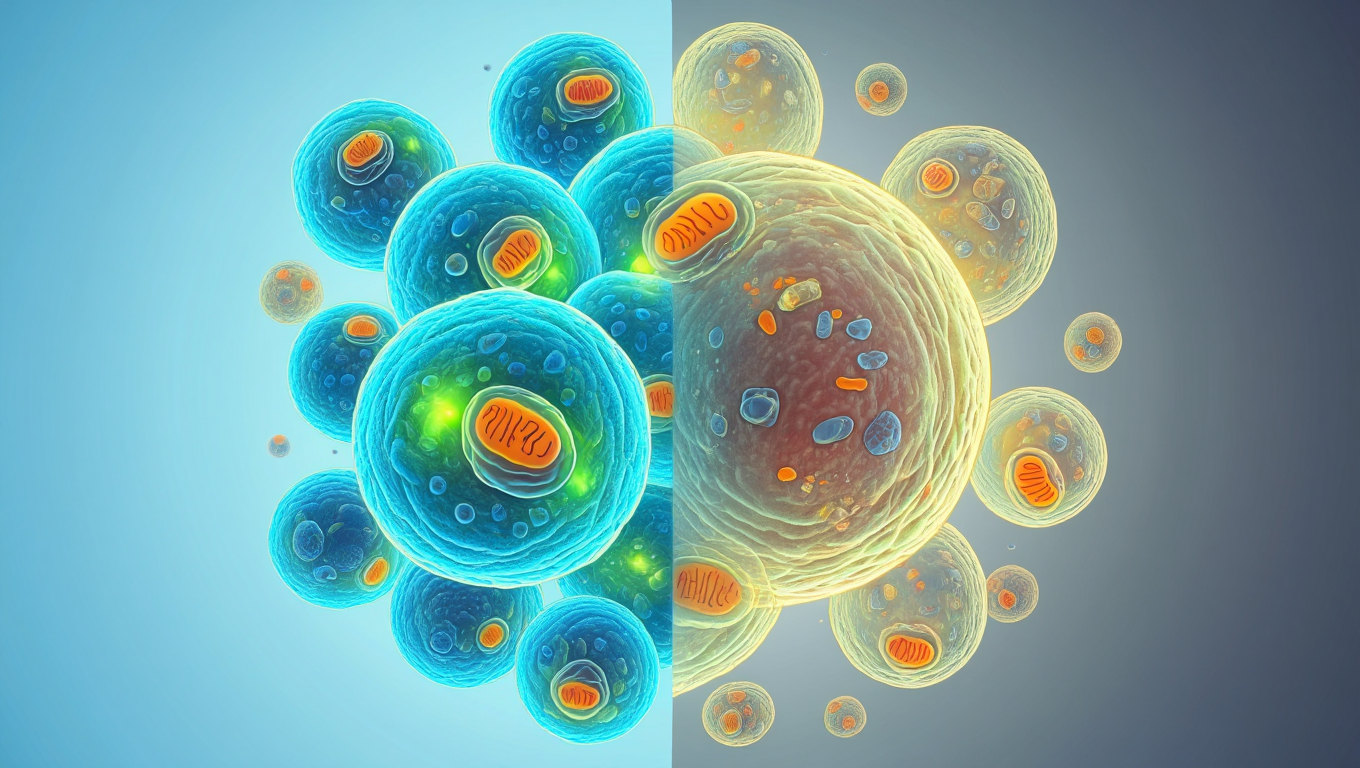
Cellular ageing is a complex biological process resulting from the interaction between several physiological mechanisms: cellular senescence, chronic inflammation, metabolic disorders and tissue regeneration capacity. Far from being solely a phenomenon linked to the passage of time, biological ageing also depends on numerous environmental factors and lifestyle.
At the heart of these mechanisms is cellular senescence, a biological programme that prevents damaged cells from dividing in order to protect the body. When this process works properly, it helps repair tissue and prevent cellular abnormalities. However, when senescent cells accumulate, they can contribute to chronic inflammation and progressive tissue degradation.
This article is the cornerstone of our feature on cellular ageing. It summarises the essential knowledge and then guides you to our detailed articles on the different aspects of senescence.
What is cellular senescence?
Senescence is a safety mechanism built into the biology of our cells. When a cell detects significant damage to its DNA or metabolism, it can activate a programme that permanently blocks its multiplication.
This biological response therefore prevents a potentially defective cell from multiplying. It thus acts as a protective mechanism against certain diseases and plays an important role in tissue repair.
To learn more about this mechanism, read our full article:
👉 Cellular senescence: understanding this key mechanism of ageing and regeneration
Why do senescent cells accumulate with age?
In a young body, senescent cells are generally eliminated by the immune system after they have fulfilled their role. However, with ageing, this biological cleansing capacity decreases.
Senescent cells then persist in the tissues and continue to produce inflammatory molecules. This phenomenon contributes to the onset of a condition called inflammaging, characterised by low-grade chronic inflammation.
This process can impair cell communication, slow down tissue repair and promote certain metabolic imbalances.
To understand this phenomenon in detail:
👉 Why do senescent cells accumulate with age?
What role does diet play in cellular health?
Nutrition plays a major role in regulating cellular ageing. The nutrients provided by food thus directly influence several biological mechanisms involved in senescence:
- management of oxidative stress
- regulation of inflammation
- mitochondrial function
- DNA repair
A diet rich in protective nutrients, natural antioxidants and essential micronutrients therefore helps to maintain a biological environment that is conducive to cellular health.
Discover our comprehensive analysis:
👉 What role does diet play in regulating cellular senescence?
How does lifestyle influence longevity?
Cellular health does not depend solely on diet. Several aspects of lifestyle also influence the balance between inflammation and regeneration:
- regular physical activity
- restorative sleep
- stress management
- exposure to natural light
- healthy environment
Certain moderate physiological stimuli, known as hormesis, can also strengthen the body’s ability to adapt.
To learn more about this topic:
👉 Lifestyle, hormesis and longevity: how to naturally support cell regeneration
How can we support cellular health on a daily basis?
Although ageing is a natural process, several habits can help to support the biological mechanisms involved in longevity:
- eating a varied and balanced diet
- maintain regular physical activity
- promoting restful sleep
- limiting sources of chronic stress
- maintaining a good metabolic balance
These measures are never a substitute for medical treatment when it is necessary. However, they are important levers in a comprehensive approach to health and ageing.
| Factor | Biological impact | Consequence |
|---|---|---|
| Cell senescence | Cell cycle arrest | Cell protection or accumulation |
| Chronic inflammation | Activation of inflammatory mediators | Tissue ageing |
| Oxidative stress | DNA and membrane damage | Cellular alteration |
| Lifestyle | Metabolic and hormonal influence | Cellular resilience or fragility |
Frequently asked questions about cellular ageing
What is cellular ageing?
Cellular ageing refers to all the biological changes that gradually affect cells over time.
Is cellular senescence always negative?
No. Senescence is primarily a protective mechanism that prevents the proliferation of damaged cells.
Why do senescent cells become problematic with age?
With age, they are less effectively eliminated by the body and can accumulate in tissues, promoting chronic inflammation.
Can diet influence cellular ageing?
Yes. Diet influences several biological mechanisms such as oxidative stress, inflammation and energy metabolism.
Can lifestyle influence longevity?
A balanced lifestyle that includes physical activity, quality sleep and stress management helps to support cellular health.
Written and medically validated by Arnaud, Doctor of Pharmacy and owner of Pharmacie Soin et Nature.