There is one essential thing to know: an essential oil is a concentrated and complex liquid extract of an aromatic plant, obtained by steam distillation of aromatic plants or parts of these plants (flowers, leaves, wood, roots, bark, fruit, etc.). It is the distilled essence of the aromatic plant. As a result, essential oils contain concentrated active molecules, some of which pose a potential danger that you should be aware of.
What are the dangers of the main essential oils?
There are many essential oils, and they contain substances that can be dangerous if not used correctly or on the “right people”. An active substance is a chemical component with specific biological effects that may also have toxic potential. This toxicity is not uniform and can vary depending on several factors, including the biochemical composition of the substance, the dose administered, the route of administration, and the physiological state of the exposed individual.
| Types of toxicity in essential oils | Main compounds involved | Examples of essential oils | Main risks | Major precautions |
|---|---|---|---|---|
| Dermocaustic (irritant/skin burns) | Phenols (thymol, carvacrol, eugenol) | Thyme ct thymol, savory, compact oregano, clove | Burns, severe skin irritation | Always dilute heavily, avoid applying undiluted and to mucous membranes |
| Dermocaustic (irritant/skin burns) | Aromatic aldehydes (cinnamaldehyde) | Cinnamon (leaves, bark) | Severe irritation of skin and mucous membranes | Strict dilution, avoid sensitive areas |
| Dermocaustic (irritant/skin burns) | Terpenic aldehydes (citrals, citronellal) | Verbena, lemon eucalyptus, lemongrass, lemon litsea, lemon balm | Moderate skin irritation, irritation of mucous membranes | Systematic dilution, avoid mucous membranes and fragile skin |
| Skin irritant | Monoterpenes (pinene) | Pines, firs | Possible irritation | Dilute for local applications, avoid sensitive areas |
| Photosensitising | Furocoumarins | Citrus zest (lemon, orange, grapefruit, mandarin), bergamot, angelica, khella, cumin | Burns, pigmentation spots after UV exposure | No sun/UV exposure for at least 6 hours after application or oral intake |
| Allergenic | Sesquiterpene lactones | Laurel, annual mugwort, sweet inula | Allergic skin reactions | Always perform a skin test beforehand; avoid use in individuals with known allergies |
| Neurotoxic / Abortive | Ketones (thujone, pulegone, italidione, menthone, piperitone, verbenone, etc.) | Helichrysum, peppermint, sage, camphor rosemary, Atlas cedar | Risk of convulsions, neurological toxicity, risk of miscarriage | Contraindicated in pregnant/breastfeeding women, infants and children under 6 years of age, epileptics, elderly people; avoid oral administration |
| Hepatotoxic | Phenols (thymol, carvacrol, eugenol) | Thyme ct thymol, savory, compact oregano, clove (oral use) | Hepatic toxicity in case of overdose or prolonged treatment | Limit to 1 drop 3×/day, max 500 mg/day and 3 weeks; combine with a hepatoprotective essential oil if necessary (carrot, thyme thujanol, lemon, rosemary verbenone) |
| Nephrotoxic | Monoterpenes | Pine, fir, juniper, sandalwood, cypress | Renal toxicity in case of prolonged oral use | Avoid long-term oral treatment; caution in patients with renal insufficiency |
| Nephrotoxic Skin irritant | Pinene (monoterpenes) | Scots pine, lemon tree, balsam fir, black spruce, juniper | Long-term renal risk, skin irritation | Avoid prolonged oral use, always dilute for topical application |
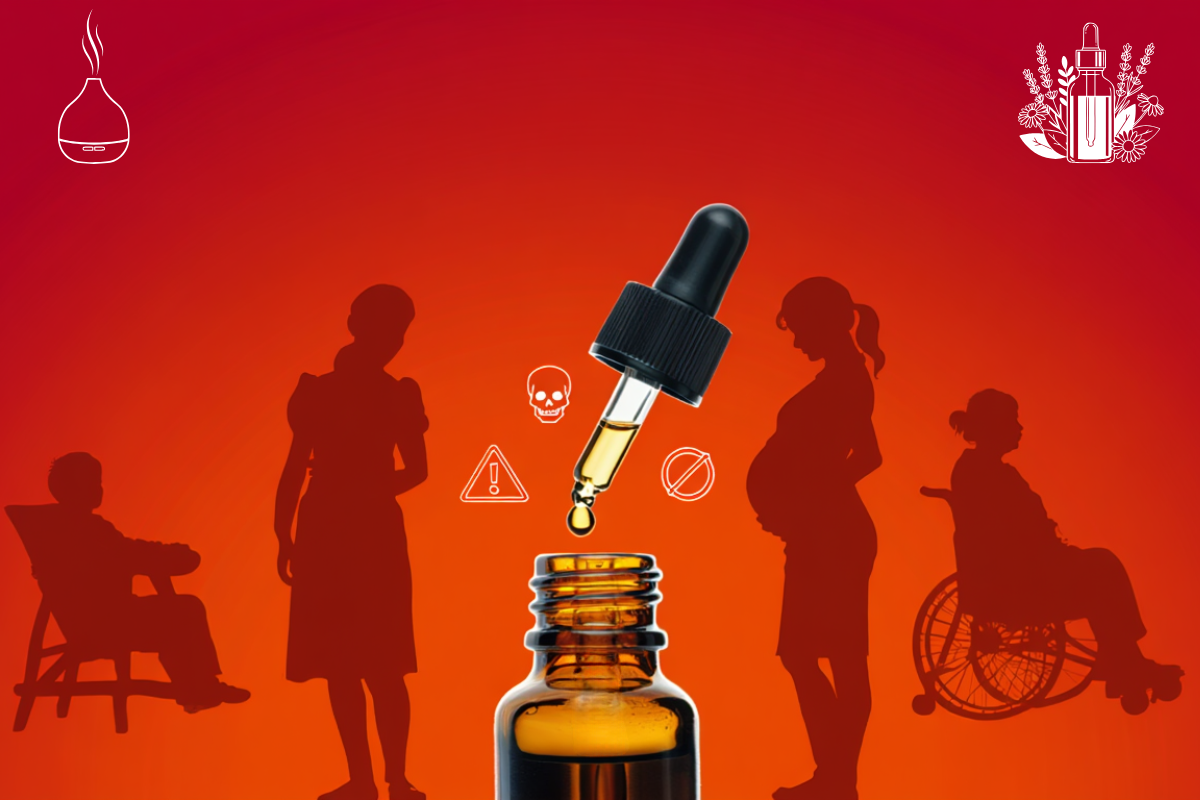
Always adjust the dose, route of administration and duration, and seek advice from a healthcare professional trained in aromatherapy, especially for children, pregnant women and frail individuals.
What precautions should be taken to avoid the dangers of essential oils?
It is essential to take several precautions when using essential oils to avoid injury or health problems , which can sometimes be serious.
General precautions
- Never inject essential oils.
- It is strongly advised not to use essential oils on pregnant women, during breastfeeding, or on children under 3 years of age.
- It is imperative not to leave bottles of essential oils within reach of children. Store them carefully, preferably upright.
- Avoid using pure essential oils, with exceptions such as true lavender, ravintsara, rosewood, etc.
- Never apply pure essential oil to the eyes or mucous membranes.
- Avoid using essential oils directly in bath water.
- Do not expose essential oils to sunlight, as some of them have different properties and therefore specific effects and may be phototoxic.
- If you are prone to allergies, perform a skin test on the inside of your elbow and wait approximately 15 minutes to observe any reaction.
- Before use, be sure to check the appropriate method of administration and dosage for each variety of essential oil.
What to do in case of an accident?
- If an excessive amount of essential oil is accidentally ingested, it is imperative to contact the poison control centre immediately . In the event of accidental ingestion of excessive amounts of essential oil, take approximately 30 ml of vegetable oil to dilute the substance and minimise the associated risks .
- If an essential oil comes into contact with the eyes or causes skin burns, immediately apply a vegetable oil, such as sweet almond oil, to dilute and reduce the irritating effect.
Storage of essential oils
- Keep essential oil bottles out of the reach of children. Store them carefully, preferably in an upright position.
- Store them away from light, preferably in a coloured or aluminium bottle inside a cupboard.
- Maintain the storage temperature between 5 and 35 degrees Celsius maximum.
- Observe the shelf life, which is generally 5 years for essential oils and 3 years for essences.
These precautions apply to all essential oils. However, some have specific contraindications, so consult a healthcare professional for advice.
FAQ – Potentially dangerous essential oils
Why are some essential oils dermocaustic or photosensitising?
Essential oils rich in phenols, aromatic aldehydes or certain citrus fruits can cause skin irritation or burns, while those containing furocoumarins expose you to a risk of photosensitisation, which requires strict dilution and avoidance of sunlight after application.
What are the risks associated with essential oils?
Even in small doses, essential oils can pose a toxic risk. As a guide, 1 ml generally corresponds to around 20 to 40 drops, depending on the viscosity of the oil, and even this small amount can cause poisoning, regardless of age. Higher doses, around 5 ml (approximately 100 to 200 drops), can cause serious reactions, including convulsions in a healthy person, as well as other adverse effects that vary depending on the essential oil used.
What to do in the event of an accident involving essential oil?
In the event of accidental ingestion of a large quantity, contact a poison control centre immediately and quickly swallow vegetable oil to dilute the essential oil. In the event of skin or eye contact, rinse with vegetable oil and seek medical advice if necessary.