Medicinal plants can offer a useful natural remedy for stress when anxiety is mild to moderate. When chosen and dosed correctly, they help to ease tension, improve sleep and alleviate physical symptoms (such as palpitations, stomach cramps and a knot in the stomach), without the habit-forming effects of some conventional treatments. However, they are not a substitute for medical supervision in cases of severe anxiety, but form part of a holistic approach to managing anxiety: a healthy lifestyle, self-awareness, and psychological support if needed.
What precautions should be taken before starting a course of anti-stress herbal remedies?
Before starting any natural anti-stress treatment, a few safety precautions are essential. As a precaution, herbal medicine is generally not recommended during pregnancy or while breastfeeding, unless advised otherwise by a doctor. Some plants affect the central nervous system: it is therefore not advisable to combine them with other sedatives or alcohol, as this may increase drowsiness.
Certain species may reduce alertness (for example, eschscholtzia, or California poppy), which means you must exercise caution when driving or operating machinery. If, after two weeks of regular use, symptoms persist or worsen, you should consult a doctor. Herbal supplements with anti-stress properties can be used to support benzodiazepine withdrawal, but never on their own: the treatment plan must be agreed and followed in consultation with a doctor, involving a gradual reduction in medication and a case-by-case adjustment of the herbal remedies.
How should the main natural anti-stress herbs be used?
Here are the main plants used as natural stress relievers, to help you find your way around. Check for contraindications before taking any.
| Plant (Latin name, part) | Profile / main indications | Common forms and dosages |
|---|---|---|
| Passionflower (Passiflora incarnata, aerial parts) | Anxiety with tachycardia, palpitations, night-time waking, anxiety-related stress, support during withdrawal (opioids, benzodiazepines) | Herbal tea: approx. 2 g per cup, steep for 10–15 mins, 1 to 4 cups/day |
| Valerian (Valeriana officinalis, underground parts) | Anxiety with irritability, muscle tension, muscle spasms, stomach ache, difficulty falling asleep, tobacco dependence | Capsules, standardised dry or liquid extracts, as advised by the manufacturer or healthcare professional |
| Hawthorn (Crataegus laevigata, flowers and tops) | Nervousness, irritability, palpitations, ‘lump in the throat’, sweaty palms, anxiety-related cardiac symptoms | Herbal tea, extracts, capsules depending on the product (see package leaflet or health advice) |
| Eschscholtzia (California poppy, aerial parts) | Emotionality, evening rumination, difficulty falling asleep, anxiety with night-time awakenings, mild drowsiness possible | Infusion: 1 tsp per cup, 10 mins, up to 4 cups/day |
| Ballota (Ballota nigra/foetida, flowering tops) | Anxiety with digestive cramps, abdominal pain, intestinal discomfort, spasmophilic constitution | Mother tincture: ~30 drops, 2 to 3 times a day, as advised by a healthcare professional |
| Lemon balm (Melissa officinalis, leaves) | Stress with irritability, hyperreactivity, digestive cramps, support during benzodiazepine withdrawal (under medical supervision) | Herbal tea on its own or in soothing blends; dosage adjusted according to form and withdrawal protocol |
| Rhodiola (Rhodiola rosea, rhizome) | Chronic stress with nervous exhaustion, reduced motivation, difficulty concentrating, coping with stressful situations | Capsules in the morning / at the start of the day, as a course of treatment, according to the supplement’s dosage |
| Oats (Avena sativa) | Agitated stress, general nervousness, attention disorders, mental exhaustion | Extracts, herbal teas or ‘natural anti-stress’ blends, as advised by the manufacturer |
| Poppy (petals) | Relaxation, anxiety-related sleep disorders, need for mild sedation | Standardised capsules: taken with the evening meal and at bedtime (as per instructions) |
To enhance the effect of herbal teas against anxiety, they can be flavoured with hawthorn honey, which also has a soothing effect.
Herbal teas, capsules or extracts: how to choose your natural stress reliever?
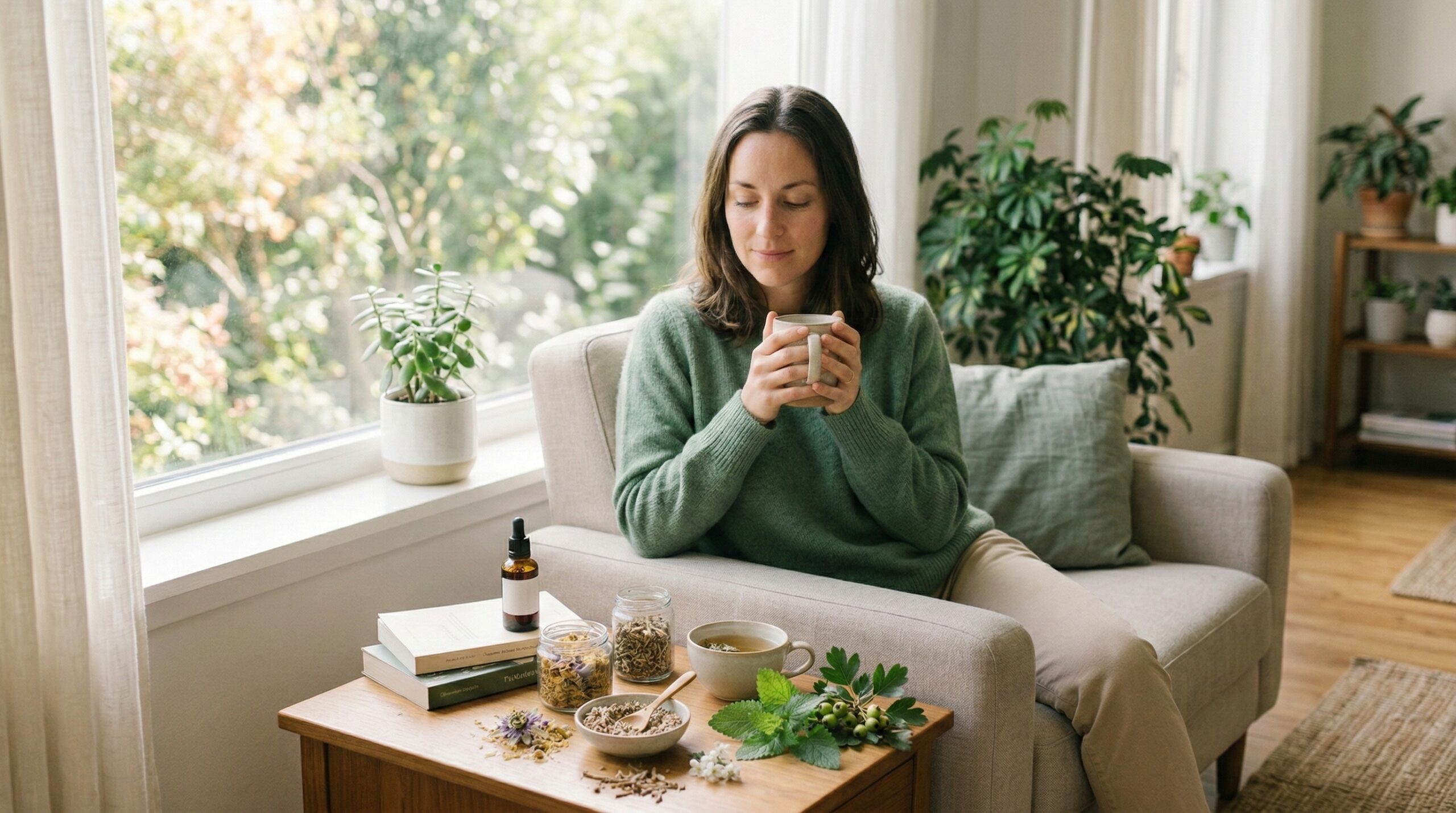
The choice of form depends on your constitution, lifestyle and preferences. Herbal teas are well suited to those who enjoy an evening ritual: 1 to 4 cups a day depending on the plants (passionflower, eschscholtzia, lemon balm, hawthorn…), taken as a course of treatment for at least 2 weeks. To enhance the natural anti-stress effect, it is often recommended to combine several species (for example, hawthorn, passionflower and lemon balm for palpitations and digestive cramps).
Standardised capsules or tablets are more practical for daily use and guarantee a precise amount of active ingredients (valerian, rhodiola, poppy, anti-stress complexes). They are generally taken 1 to 3 times a day, over several weeks, following the manufacturer’s or healthcare professional’s instructions. Fluid extracts or mother tinctures, often measured in drops, offer a high concentration and allow for the creation of personalised blends (for example, hawthorn, lavender and lemon balm in an oral solution, to be taken in the evening with dinner and then at bedtime).
In all cases, a course of herbal treatment should be planned: one often starts with a low dose, then gradually increases it whilst monitoring tolerance (drowsiness, digestive problems, etc.). For a natural anti-stress effect, one should avoid prolonged use without reassessment. Furthermore, one should never abruptly stop a benzodiazepine-type anxiolytic treatment and replace it solely with herbal remedies: withdrawal must always be medically supervised.
In summary, herbs offer a valuable natural anti-stress remedy, particularly when combined with a calming lifestyle (regular sleep, gentle physical activity, breathing exercises, a suitable diet) and medical supervision tailored to the level of anxiety. They are not intended to solve everything, but to support the body and gently guide a return to balance.
FAQ – Herbs and natural stress relief
Can anti-stress plants replace anti-anxiety medication?
No. They can be used alongside treatment or during withdrawal, but should never replace a prescribed anxiolytic without medical advice. Any change in treatment must be discussed with your doctor. Moreover, as a complement to medical supervision, this type of natural stress reliever is particularly recommended when anxiety remains mild to moderate.
How long does a course of natural anti-stress plants last?
For mild anxiety, courses of 2 to 4 weeks are often recommended, to be adjusted according to how symptoms develop. If anxiety persists or worsens after two weeks, you should seek medical advice.
Can several herbs be combined in the same herbal tea or supplement?
Yes, the synergies can be very beneficial (for example, passionflower, hawthorn and lemon balm). However, you must stick to the recommended doses and avoid combining multiple formulas without medical supervision.
Are anti-stress herbs safe?
They are still medicines in their own right: extra caution is required during pregnancy and breastfeeding, as some plants may cause drowsiness or interact with sedatives. If in doubt, it is best to seek advice from your pharmacist or doctor.