The link between essential oils and anxiety often comes up whenever natural stress management is discussed. Certain essential oils contain molecules known as ‘negative ions’, similar to the negative ions found in the air after a storm. These molecules promote a sense of relaxation and inner calm.
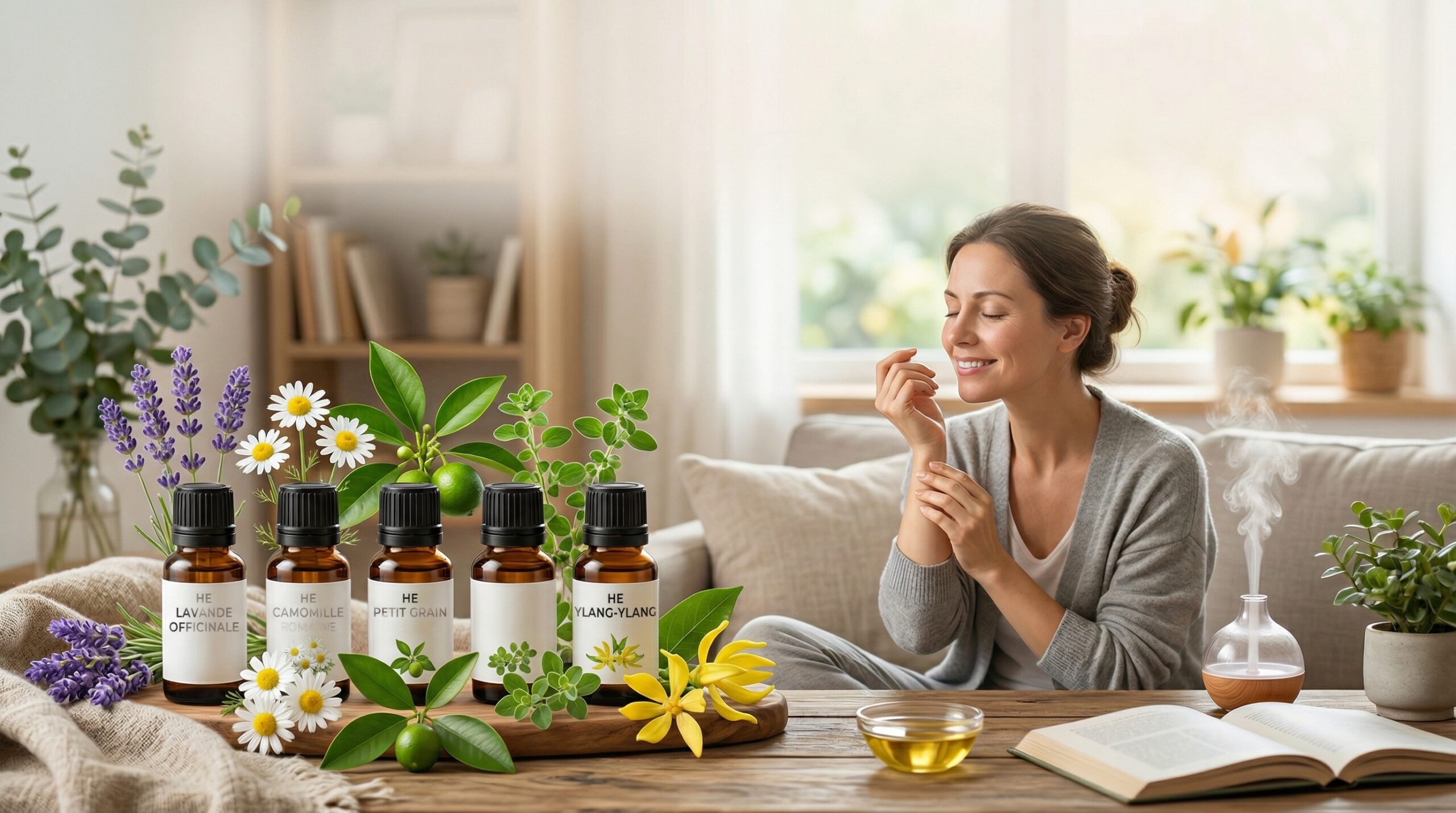
Not all essential oils are therefore relaxing. The most effective against anxiety are those rich in linalool (such as true lavender or petitgrain bigarade) or in esters (such as Roman chamomile). These molecular families are recognised for their calming effect on the nervous system. When used appropriately, they can help with mild to moderate anxiety. This should be done as a complement to a soothing lifestyle, without replacing medical treatment when anxiety becomes debilitating.
What precautions should be taken before using an essential oil for anxiety?
Before using an essential oil for anxiety, it is essential to check the basic contraindications. Due to their high concentration of active ingredients, most essential oils are not recommended during pregnancy. This is particularly true during the first trimester, and their use remains strictly regulated during breastfeeding. In these patients, self-medication with essential oils should be avoided without specialist advice.
Be mindful also of interactions and drowsiness. Relaxing oils should not be added without careful consideration to benzodiazepines, antidepressants or sedative antihistamines. Indeed, drowsiness and the risk of road accidents may increase. Certain oils (such as ylang-ylang) may cause a moderate drop in blood pressure. This property requires caution in cases of hypotension. Finally, a course of aromatherapy should not exceed 2 to 3 consecutive weeks. A break of at least one week should also be taken before resuming treatment if necessary.
Certain oils, such as mandarin, are photosensitising: they should therefore not be applied to the skin before exposure to the sun or UV light. Furthermore, in cases of anxiety persisting for several weeks, frequent panic attacks or dark thoughts, essential oils should never delay seeking medical advice.
Which essential oil should you choose first for anxiety?
Essential oils useful for anxiety have a very specific profile.
- Lavender (Lavandula angustifolia)
Rich in linalool, it is a go-to remedy for anxiety accompanied by digestive or cardiac symptoms (spasms, nausea, extrasystoles). It is often recommended for people with high blood pressure and anxiety. In practice, you can use 2 drops diluted in massage oil on the solar plexus or the inner wrists, up to 3 times a day, as a short course of treatment. - Petitgrain bigarade (Citrus aurantium ssp. aurantium, leaf)
Calming and antispasmodic, it helps to soothe functional palpitations, a lump in the throat and internal tension. It is particularly useful for stage fright, anxiety about the future or relationship stress. - Roman chamomile (Chamaemelum nobile)
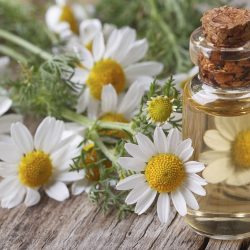
Highly soothing and sedative, thanks to its high ester content, it is recommended for anxiety attacks accompanied by insomnia, emotional shock or anxiety prior to a procedure. In practice, 3 diluted drops can be massaged onto the solar plexus and wrists during anxiety attacks and/or 30 minutes before bedtime. - Marjoram (Origanum majorana)
A key essential oil for neurovegetative dystonia, it regulates the autonomic nervous system and is suitable for hypersensitive individuals experiencing palpitations, a knot in the stomach or clammy hands. It is used diluted to 50% in a vegetable oil and massaged into the solar plexus, up to three times a day. - Full-spectrum ylang-ylang (Cananga odorata)
Hypotensive and relaxing, it is useful for restlessness, heart palpitations and difficulty falling asleep. For adult use only, it should always be diluted to avoid skin irritation.
These oils, rich in linalool and/or esters, form the basis of ‘anxiety essential oil’ blends. Others (sweet orange, mandarin, frankincense) may be added occasionally, with their own precautions.
How can you use an essential oil for anxiety in your daily life?
There are several ways to use an essential oil for anxiety without having to use multiple products.
- Simple relaxing massage
Massage oils combine the effects of touch and aroma. A typical formula for adults:- Organic sweet orange: 33 drops
- Organic ylang-ylang: 33 drops
- Organic geranium: 15 drops
- Argan vegetable oil: 50 ml
Massage the back, neck or shoulders at the end of the day to promote overall relaxation.
- Localised blend for wrists and plexus
For example: 10 drops of lavender, 15 drops of Roman chamomile and 20 drops of sweet orange in hazelnut oil, making up to 10 ml. Apply 1 to 2 drops to the wrists, temples and base of the neck, then breathe in the scent deeply whenever you feel stressed. - Ready-to-use formulations (baths, sprays, roll-ons, capsules)
Relaxing essential oil baths, room sprays, blends for Zen diffusion or ‘sleep/stress’ roll-ons offer practical solutions when you prefer not to handle pure oils. “Sleep/stress” capsules containing organic essential oils (Roman chamomile, petitgrain bigarade, mandarin, lemongrass) are taken orally, over a few days or as a short course of treatment, for those aged 12 and over, strictly following the instructions.
In all cases, limit a course of treatment to 2–3 weeks, then take a break of at least one week. Finally, stop use in the event of a skin reaction, dizziness, unusual fatigue or worsening anxiety.
Relieving anxiety naturally is a long-term process, for which numerous techniques and natural remedies are available. Medical advice may be required for some of these. The key is not to face growing anxiety alone.
FAQ – Essential oils and anxiety
Can an essential oil alone treat an anxiety disorder?
No. An essential oil for anxiety can relieve mild symptoms (tension, rumination, difficulty falling asleep), but it is no substitute for medical supervision or psychotherapy when the disorders are severe, long-standing or highly debilitating.
Which essential oil should be used first to treat anxiety?
As a first-line treatment, lavender, petitgrain bigarade and Roman chamomile are often chosen for their calming effects and good safety profile when properly diluted and used for short periods.
Can several essential oils be combined in the same preparation?
Yes, synergies can be beneficial (for example, lavender, chamomile and sweet orange). However, it is important to follow the recommended dosages, avoid using multiple products simultaneously and take into account the contraindications of each oil, particularly if you are taking medication or have a fragile constitution.