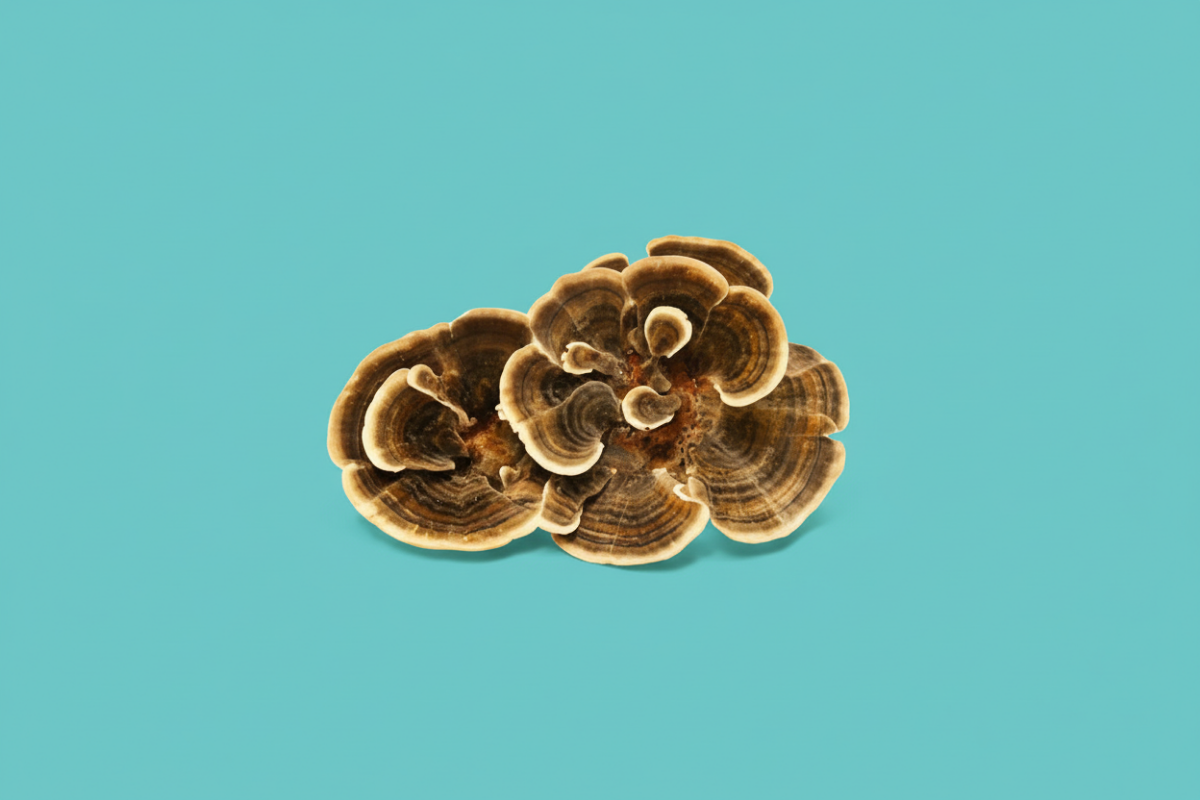
Why is the Turkey Tail mushroom attracting growing medical interest?
Turkey Tail provides bioactive polysaccharides that modulate the immune system.
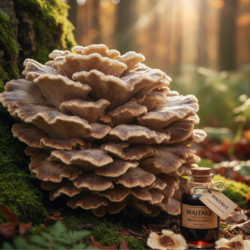
This therapeutic mushroom, found on dead wood in temperate zones, produces PSK (Polysaccharide-K) in Japan and PSP (Polysaccharide-Peptide) in China. These compounds stimulate lymphocytes, regulate cytokines and support adaptive immunity. Asian pharmacopoeias rank it among the pillars of immune support.
What effects does Turkey Tail have on the immune system?
Turkey Tail activates T, B and NK cells, which are essential for innate and adaptive immunity.
In addition, PSK and PSP extracts balance inflammatory responses by modulating pro- and anti-inflammatory cytokines. Several clinical studies have shown that supplementation with 3g a day improves immune markers, particularly in patients undergoing chemotherapy.
What role does Turkey Tail play in integrative oncology?
Turkey Tail acts as a natural adjuvant to conventional cancer treatments.
In digestive cancers such as gastric, colorectal or oesophageal cancer, combining PSK with chemotherapy improves overall survival. However, some older studies have methodological limitations. As a result, the experts recommend that PSK should be used in a supervised manner, as part of an overall medical treatment plan.
| Type of cancer | Effects observed | Level of evidence |
|---|---|---|
| Gastric | Improved survival after surgery | High (randomised trials) |
| Colorectal | Increased survival with PSK chemotherapy | Meta-analyses |
| Breast | Immune support and possible reduction in recurrence | Preliminary |
| Liver / Lung | Positive results but limited data | Moderate |
Does the Turkey Tail influence the intestinal microbiota?
Turkey Tail polysaccharides act as natural prebiotics.
They encourage the development of beneficial bacteria such as Bifidobacterium and Lactobacillus. Supplementation over 8 weeks improves microbial diversity and strengthens the intestinal barrier. As a result, Turkey Tail also supports digestive immunity.
What are the antioxidant and metabolic effects of Turkey Tail?
Turkey Tail contains flavonoids and phenols with antioxidant properties.
Preclinical data show a reduction in oxidative stress, an improvement in blood sugar levels and liver protection. However, these results still need to be confirmed in human clinical trials.
What is the tolerance and dosage of Turkey Tail?
Standardised extracts of Trametes versicolorl are well tolerated up to 3 g per day.
Undesirable effects are rare and mainly digestive. This is why the National Cancer Institute considers PSK to be a useful adjunct in integrative oncology. However, herbal teas do not provide sufficient concentrations of active ingredients.
FAQ about Turkey Tail mushrooms
- Is Turkey Tail a treatment for cancer?
No, it can only be used as a complement to medical treatment. - What dose do studies recommend?
Clinical trials show effects from 3 g/day of PSK. - Can Turkey Tail be taken as an herbal tea?
Concentrated PSK/PSP extracts remain the only forms studied clinically. - Are there any side effects?
They are rare, generally digestive, and often related to the chemotherapy. - Do I need medical advice?
Yes, especially in cases of cancer or associated drug treatment.