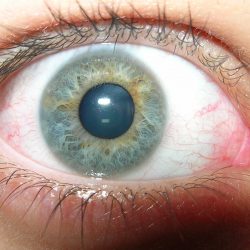

Age-related vision loss is not always simply a result of eye strain. It can be caused by the activation of a specific receptor, TLR2, located in the centre of the retina.
This phenomenon is still little known to the general public. However, it may already be active in many people without them realising it. Researchers at Trinity College Dublin have shown that TLR2 plays an important role in certain inflammatory mechanisms involved in ocular degeneration.
This means that visual impairment in older people is no longer simply a fact of life. It also appears to be the result of a molecular imbalance that could, in part, be modulated. A better understanding of TLR2 would therefore enable earlier intervention to limit certain visual impairments before they become irreversible.
Why is the TLR2 receptor implicated in age-related vision loss?
In 2020, research teams in Dublin demonstrated the presence of Toll-Like Receptor 2 (TLR2) in retinal cells. Under normal conditions, this receptor remains relatively inactive. However, when exposed to oxidative stress, it can trigger a strong inflammatory response.
Repeated activation can contribute to vision loss. According to researchers, TLR2 may be involved in several age-related visual disorders that affect the vast majority of people over the age of 50. For this reason, it has become a priority research target in order to better understand and slow down certain types of retinal degeneration.
Vision loss after age 50: a cause for concern?
According to a report by the DREES, nearly 96% of French people over the age of 50 report suffering from vision problems. This is therefore a real public health issue.
In everyday life, this decline in vision leads to several difficulties. For example, reading becomes more tiring, driving more uncomfortable and certain details are more difficult to distinguish.
However, this report did not offer any clear ways to slow down this visual decline. Today, data on TLR2 offers a new angle of understanding and paves the way for more targeted strategies to protect the retina.
What are the symptoms of TLR2-related vision loss?
In everyday life, certain signs may reveal a progressive disorder of the retina. These may be linked to the activation of inflammatory pathways such as TLR2.
For example, we observe:
- Difficulty reading up close or distinguishing small print in a book, on a label or on a phone screen.
- Difficulty counting money, handling small objects or seeing fine details.
- Discomfort or glare when driving at night, with a feeling of blurred vision.
- A feeling of blurred vision, reduced contrast or difficulty recognising faces from a distance.
These signs are often simply attributed to the natural ageing of the eyes. However, they can also indicate a decline in vision linked to oxidative and inflammatory mechanisms in the retina. In this case, a comprehensive eye examination is strongly recommended.
Why is TLR2 described as a “time bomb” in our eyes?
TLR receptors are part of the innate immune system. They enable the body to quickly recognise certain infectious agents. Humans have several types of TLR, including TLR2.
This receptor is also present in the tissues of the eye, particularly in the retina. When activated, it can trigger significant inflammatory cascades. Studies show that this activation disrupts the balance of local immune cells, alters the vascularisation of the retina and weakens the blood-ocular barrier.
This barrier plays a central role in protecting the eye. When it is compromised, the retinal environment becomes more vulnerable. This creates conditions conducive to ocular degeneration and progressive vision loss.
Is oxidative stress a key factor in vision loss?
TLR2 is largely activated by oxidative stress. This term refers to an excess of free radicals that attack the cells of the retina.
Several lifestyle factors increase this stress. These include, for example, repeated exposure to intense light, blue light from screens, tobacco smoke and pollution. Over time, these attacks accelerate the ageing of eye tissue.
Researchers have shown that a pro-oxidant environment promotes TLR2 activation, retinal inflammation and photoreceptor degeneration. This trio contributes directly to vision loss. Conversely, limiting oxidative stress through a healthy lifestyle, a diet rich in antioxidants and, if necessary, targeted supplements can help protect sensitive eye cells. This also helps to better preserve visual function over the years.
What are the new avenues for slowing down vision loss?
Thanks to these discoveries, it is now possible to consider more refined approaches to protecting the retina. By targeting TLR2 or limiting its activation through the reduction of oxidative stress, the aim is to delay age-related vision loss.
At the same time, certain families of polyphenols, such as anthocyanosides found in red fruits, are attracting growing scientific interest. These compounds may support ocular microcirculation and strengthen the eye’s antioxidant defences. They appear particularly promising in preventing ocular ageing through targeted supplements and disorders associated with vision loss.
Conclusion: act early to protect your vision
The discovery of the role of TLR2 in ocular degeneration is an important step in understanding age-related vision loss. Oxidative stress appears to be a major trigger, but it is still possible to take action.
By adopting appropriate protective measures and exploring targeted natural solutions, it becomes easier to support retinal health. This means that vision quality can be better preserved in the long term. In this context, anthocyanosides, antioxidant pigments found in blueberries, are attracting attention for their potential beneficial effect on ocular microcirculation and protection against oxidative stress, making them interesting allies to explore in the prevention of vision loss.
- https://pmc.ncbi.nlm.nih.gov/articles/PMC7179253/
- https://www.sciencedirect.com/science/article/pii/S0014483521002827
- https://iovs.arvojournals.org/article.aspx?articleid=2691331
- https://phytocea.com/blogs/questions-de-sante/les-myrtilles-et-la-sante-oculaire-le-super-fruit-a-ne-pas-negliger
- https://www.sciencedirect.com/science/article/abs/pii/S0181551208747430