Medical warning: Aromatherapy is a powerful skincare approach that must be used with caution. Essential oils are not a substitute for conventional medical treatments in cases of severe or infected acne. Always seek advice from a healthcare professional.
To purify the skin and reduce blemishes, the traditional cosmetics range offers numerous chemical products that can sometimes be harsh. However, it is entirely possible to care for your face by relying on powerful plant-based active ingredients. Natural dermo-cosmetic topical treatments offer an excellent alternative for cleansing the skin, particularly during adolescence. The only requirement is to take great care to respect the skin barrier without ever stripping it. Using an essential oil for acne allows you to target bacteria and inflammation directly whilst maintaining the skin’s balance. Discover the best natural oils. Also learn how to incorporate them effectively into your daily routine.
Why is tea tree essential oil an exceptional natural treatment for acne?
If you had to choose just one essential oil for acne, it would undoubtedly be tea tree oil. Recognised as a major anti-infective, it has a formidable antibacterial action. Biologically speaking, it stimulates the skin’s immune system by activating white blood cells. It also promotes the differentiation of monocytes, which helps the skin defend itself.
Its activity is particularly effective against various dermatological conditions affecting the skin and mucous membranes, notably acne vulgaris. It acts as an anti-acne agent specifically targeting Cutibacterium acnes (formerly known as Propionibacterium acnes), the bacterium responsible for pore inflammation. Furthermore, it has powerful anti-inflammatory properties on the skin. Indeed, it reduces the proliferation of cells involved in inflammation and their molecules (the mediators).
The scientific evidence: Clinical studies show that, when used at a concentration of 5% in gel form, the effect of tea tree essential oil is comparable to 5% benzoyl peroxide (the standard allopathic treatment), without the side effects of dryness and irritation.
Which other essential or plant-based oil should be combined to target acne?
To create a comprehensive natural treatment for acne, tea tree oil benefits from being combined with other complementary plant extracts to create a synergistic effect.
- Marjoram essential oil: Less well-known but highly effective, it exhibits moderate antibacterial activity. It also has significant anti-inflammatory properties , characterised by the inhibition of pro-inflammatory cytokines. Just like tea tree, it boosts the anti-infectious effect by activating white blood cells. It also has a proven anti-acne effect on the C. acnes bacterium.
- Argan oil: Contrary to popular belief, applying oil to oily skin does not make spots worse, provided it is non-comedogenic. Argan oil is, in fact, an exceptional carrier oil. It is anti-inflammatory, antioxidant and directly anti-acne. It is highly nourishing and penetrates deeply. It therefore plays an essential role in skin regeneration, helping to repair tissue and minimise scarring.
How can you safely apply an essential oil to acne?
Essential oils contain highly concentrated active ingredients. Precautions for use must be followed regardless of the method of application. They must never be applied undiluted to large areas of the skin, as this may cause skin burns.
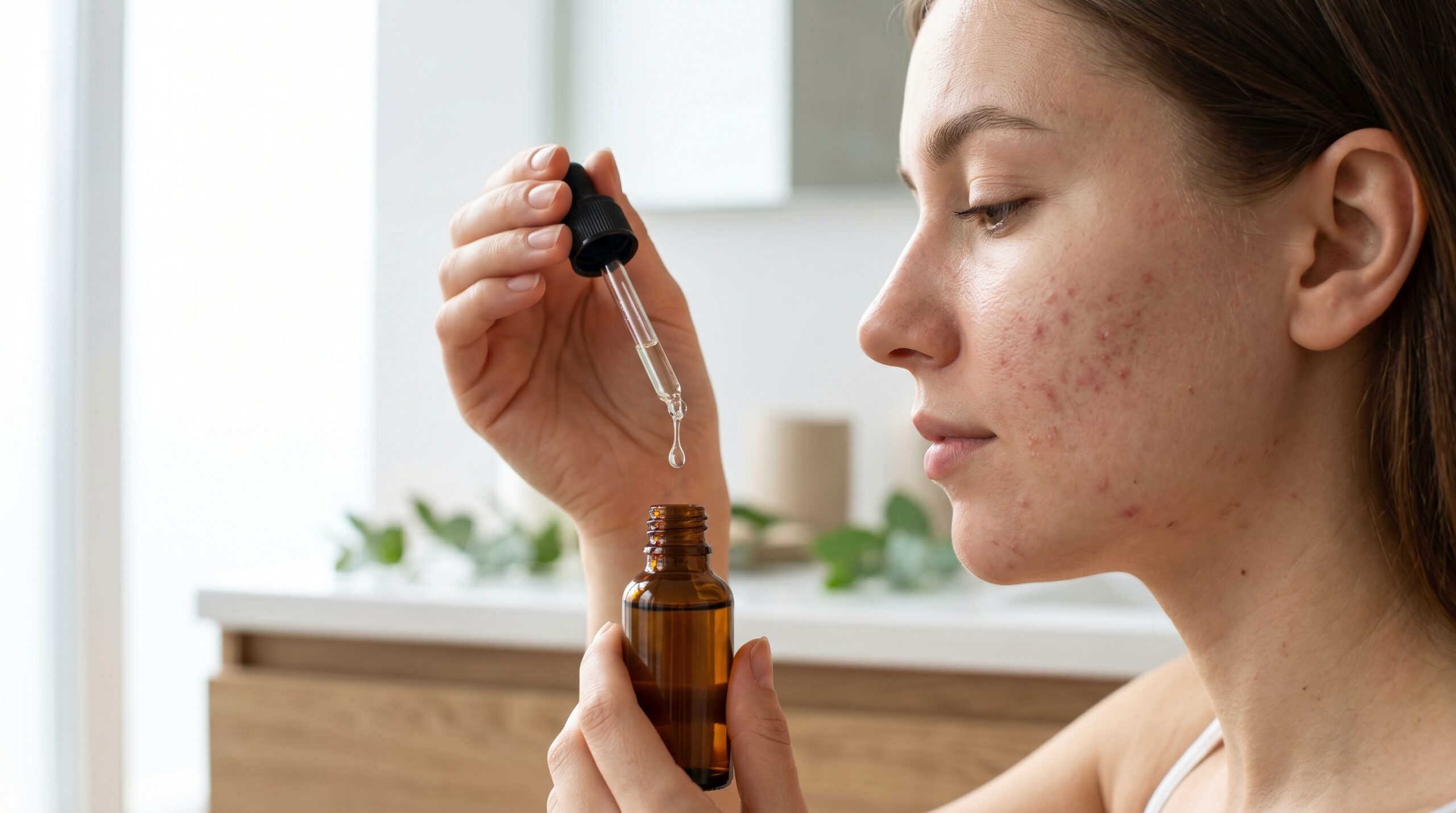
Here is the exact formula recommended for safe and effective dermo-cosmetic action:
- The synergy recipe (1% dilution): In a 10 ml bottle filled with argan vegetable oil, dilute precisely 0.1 ml of tea tree essential oil and 0.1 ml of marjoram essential oil.
- Application: Apply this mixture daily to skin that has been thoroughly cleansed and dried, once or twice a day, until symptoms show visible improvement.
⚠️ Essential precautions:
- This formula is strictly contraindicated for pregnant or breastfeeding women and for children under 12 years of age.
- You must avoid using this blend in combination with cortisone creams.
- This treatment should not be used continuously for prolonged periods.
- Due to a real risk of drug interactions, always seek advice from your pharmacist.
To optimise this routine, you can add a gentle cleanse with propolis soap or apply a purifying green clay mask once a week.
The use of an essential oil for acne demonstrates just how nature provides us with molecules of remarkable therapeutic efficacy. However, the power of natural remedies demands caution: always remember to carry out a skin tolerance test (apply a drop of the mixture to the crook of your elbow and leave for 48 hours) before applying it to your face.
External treatments aren’t the whole story: for lasting results, tackle the problem at its root by consulting our Comprehensive Guide to the Causes of Acne.
Scientific sources and medical references:
- PubMed – A comparative study of tea-tree oil versus benzoyl peroxide in the treatment of acne.
- PubMed – Origanum majorana (Marjoram)
- French Society of Dermatology (SFD) – Acne treatments
- DuMas – Management of acne using phytotherapy and aromatherapy in the pharmacy
FAQ – Frequently asked questions about essential oils and acne
Can pure tea tree essential oil be applied to a spot?
If it is a single, localised red spot, you can apply a single drop of pure tea tree oil locally using a cotton bud, no more than twice a day. However, for larger areas (cheeks, forehead, back), it must be diluted in a carrier oil to avoid irritating and drying out the skin.
What is the skin ‘purge’ effect with essential oils?
When first used, essential oils accelerate cell renewal and bring to the surface deep microcysts already present beneath the skin. Blemishes may temporarily appear more numerous. This purge effect is normal and usually subsides within two to three weeks, leaving the skin clear.
Is there a risk that argan oil will block my pores and cause more spots?
No, argan oil has a very low comedogenicity rating (close to zero), which means it does not block pores. On the contrary, its high content of essential fatty acids helps regulate sebum production, and its healing properties are ideal for repairing acne lesions without leaving marks.