
Medically reviewed by Arnaud, Doctor of Pharmacy
Last updated: 24 August 2026
Migraine is a neurological condition characterised by episodes of headache, usually on one side, which are throbbing in nature, worsened by physical exertion and accompanied by nausea or sensitivity to light. It differs from tension-type headache, which is much more common and causes a tight, squeezing sensation on both sides of the head that does not worsen with movement. An attack lasts between four and seventy-two hours, and treatment typically involves painkillers first, followed where necessary by specific treatments prescribed by a doctor. This article explains how to recognise the type of headache you are suffering from, what triggers the attacks, why taking painkillers too often perpetuates the problem, how homeopathy and magnesium can help as complementary treatments, and, above all, the signs that indicate you should seek medical advice without delay.
- The key indicator: pain on one side only, throbbing in nature, worsened by physical exertion, accompanied by nausea or sensitivity to light, points to a migraine.
- Treatment of an attack relies on painkillers. No complementary approach can replace them.
- The most common pitfall: taking painkillers regularly for more than two days a week ultimately perpetuates the headaches.
- Seek immediate medical advice if you experience: sudden, explosive pain; a fever accompanied by a stiff neck; neurological symptoms; or a headache that occurs following a blow to the head.
Migraine or tension-type headache: how can you tell the difference?
This distinction is not merely theoretical: it determines the course of action to be taken. A tension-type headache often subsides with rest and a simple painkiller, whereas an established migraine requires appropriate treatment and follow-up if attacks recur. Migraine affects around three times as many women as men and is frequently accompanied by a family history of the condition. Contrary to a persistent misconception, there is no such thing as a ‘migraine personality ’: it is a neurological condition, not a character trait.
Some headaches have yet another cause, such as sinus inflammation, which causes increased facial pain when you bend your head forwards.
| How it feels | Migraine | Tension-type headache |
|---|---|---|
| Location | Usually on one side only | Both sides, like a band around the head |
| Type of pain | Pulsating, throbbing | Tightness, constant pressure |
| Effect of physical exertion | Significantly worsens | No noticeable effect |
| Associated symptoms | Nausea, sensitivity to light and noise | Generally none |
| Duration | From 4 to 72 hours | From 30 minutes to several days |
| Impact | Often requires the person to lie down in the dark | Allows the person to carry on with their activities |
What triggers a migraine attack?
A trigger is not a cause: it lowers the threshold at which an attack is triggered in someone who already suffers from migraines. The most common triggers are changes in sleep patterns, including sleeping in at the weekend, delayed or missed meals, insufficient water intake, hot weather, bright or flashing lights, and certain smells. Stress plays a particular role: attacks frequently occur not at the peak of tension, but during the subsequent relaxation, which explains Saturday-morning migraines.
The role of diet varies greatly from person to person and is often overestimated. Cutting out a long list of foods as a precaution disrupts mealtimes and can itself become a trigger. It is better to note down what actually precedes your attacks over a period of a few weeks.
How can you relieve a migraine attack?
The key factor is timing: the sooner the painkiller is taken, the more effective it is. Waiting to ‘see if it goes away’ allows the attack to take hold and makes the treatment less effective. Depending on the severity and your response to standard painkillers, your doctor may prescribe specific treatment for the attack and consider preventive treatment if attacks are frequent or debilitating.
Non-medicinal measures are no substitute for this treatment but can be a useful complement: lying down in a dark, quiet room, applying a cold compress to the forehead or the back of the neck, and drinking water. They help to reduce discomfort whilst the treatment takes effect.
Could your headaches actually be caused by the painkillers themselves?
This is the most common scenario encountered at the chemist’s counter, and yet the least well understood. The mechanism is a vicious circle: pain leads to taking a painkiller; the effect wears off; headaches become more frequent; the medication is taken more often; and it is now the doses themselves that are perpetuating the pain. This is known as medication-overuse headache. It is characterised by a headache that has become almost daily, present on waking, in someone who takes a painkiller almost every day.
It is possible to break this cycle, but it cannot be done on one’s own: stopping the medication causes a temporary worsening of symptoms that must be anticipated, and withdrawal must be managed under medical supervision. In a pharmacy, the warning sign is easy to spot: when someone comes to renew their supply of painkillers every two or three weeks for headaches, this is the time to discuss the issue rather than simply dispensing the medication without comment.
What does homeopathy offer for migraines?
The homeopathic approach does not start with a diagnosis but with the way the pain manifests itself in your case: on which side, at what time, what alleviates it, what aggravates it, and what accompanies it. It is this description that points towards one profile rather than another. The table below groups six profiles according to the context in which the headaches occur. These are descriptive guidelines, not a prescription: the choice, form and frequency of administration depend on each individual situation.
| Context | Profile | What suggests it |
|---|---|---|
| Digestive | Nux vomica | Headache following a heavy meal or excessive alcohol consumption, accompanied by a coated tongue, bloating and irritability |
| Digestive | Iris versicolor | Pain beginning with blurred vision, accompanied by heartburn |
| Congestive | Belladonna | Sudden onset, throbbing pain, red and hot face, aggravated by noise and light |
| Congestive | Glonoinum | Sensation of throbbing and heat rising to the head, often after exposure to the sun |
| Nervous tension | Ignatia amara | Pain occurring after a upset, sensation of a lump or a pin in the throat |
| Nervous tension | Gelsemium | Pain radiating from the nape of the neck towards the forehead, with a sensation of a heavy head and drooping eyelids |
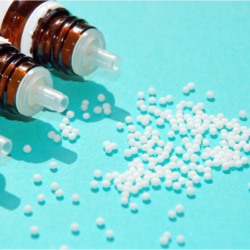
Homeopathic medicines. Homeopathy has not been reimbursed in France since 2021, following a recommendation from the Haute Autorité de Santé. It should be considered as a complement to appropriate acute treatment, never as a substitute for it. The dilution and dosage schedule depend on the individual situation: ask your pharmacist for advice.
Are magnesium and natural approaches useful for prevention?
Prevention relies on consistency rather than on a single product: regular sleep patterns, meals at fixed times, adequate hydration and regular physical activity. This forms the foundation, and is more effective than any supplement taken alongside a disorganised lifestyle.
Among supplements, magnesium is the one that has been the subject of the most research for this condition. Its effect is not judged by a single attack but by the frequency of attacks, after two to three months of regular intake. Different forms are tolerated differently, and the appropriate dose depends on your individual circumstances: this is something you should ask about at the counter. According to ANSES, magnesium intake is often below recommended levels in adults, which makes this a legitimate concern.
As stress and sleep are two major triggers, dietary supplements for stress and sleep have their place in a practical approach. As for organic essential oils, the local application of diluted peppermint oil to the temples is a traditional remedy, but should be avoided in children, pregnant women and in cases of a history of seizures. Other plants used for headaches have a history of use that predates documented records.
Why do migraines often follow the hormonal cycle?
For some women who suffer from migraines, attacks tend to cluster at a specific time in the cycle, most often just before or during their period. This is not always the case, and the strength of this link varies from person to person. Pregnancy and the menopause also alter the pattern of attacks, sometimes for the better, sometimes not.
What makes this information useful is that it is predictable: when attacks follow the menstrual cycle, one can anticipate high-risk periods and step up preventative measures at that time. If attacks are frequent and clearly linked to the menstrual cycle, it is worth discussing this with a doctor, particularly if you are currently using hormonal contraception. The presence of a visual aura changes the recommended course of action in this specific instance: this is information you should share with your doctor.
When visual disturbances are the main feature, migraine with visual aura is described slightly differently.
When should you seek medical advice for a headache?
The vast majority of headaches are benign. However, there are some situations that require immediate attention.
Seek immediate medical attention in the event of a sudden, explosive pain that reaches its peak within a few seconds; a fever accompanied by a stiff neck; neurological symptoms such as weakness in a limb, difficulty speaking or loss of vision; confusion or unusual drowsiness; or a headache occurring after a head injury.
Seek medical advice without delay, but not as an emergency, if your headaches first appear after the age of 50, if they change in nature or location from their usual pattern, if they become more frequent or more severe over the course of several weeks, if they worsen when you cough or when lying down, or if you are taking painkillers for more than two days a week.
Frequently asked questions about migraines and headaches
What is the difference between a migraine and an ordinary headache?
A migraine is a neurological condition: the pain is often on one side only, throbbing, worsens with physical exertion and is accompanied by nausea or sensitivity to light. A tension-type headache causes a tight, squeezing sensation on both sides of the head, is generally more bearable and does not get worse with movement.
How long does a migraine attack last?
Between 4 and 72 hours without treatment. If it lasts longer than three days, it is referred to as a migraine status: this is a reason to seek medical advice.
Can homeopathy be used alongside your usual treatment?
Yes, homeopathy is used as a complementary treatment and does not replace treatment for the attack itself. The rule is not to stop taking anything on your own initiative and to tell your doctor and pharmacist about everything you are taking, including anything bought without a prescription.
Does magnesium really help to space out attacks?
It is one of the most widely studied supplements for migraine prevention, with its effects typically becoming apparent after two to three months of regular use. It is not recommended for people with kidney failure and may speed up bowel movements: ask your pharmacist for advice on the most suitable form.
When should you see a doctor about a headache?
Immediately in the event of sudden, explosive pain; a fever accompanied by a stiff neck; neurological symptoms; or following a blow to the head. Not an emergency, but seek advice without delay if headaches are a new development after the age of 50, if their nature changes, if they become more frequent, or if you are taking painkillers for more than two days a week.
This article is for information purposes only and is not a substitute for medical advice. The information it contains does not constitute a diagnosis or personalised advice. If you experience any unusual, persistent or worrying symptoms, consult your doctor. If you have any questions about a treatment, including those bought over the counter, ask your pharmacist for advice.
Content approved by Arnaud, Doctor of Pharmacy — Pharmacie de Mailloles, Perpignan.