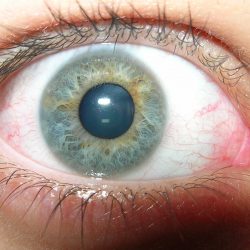

In the field of eye health, a significant breakthrough has been made thanks to the discovery of the effectiveness of anthocyanosides, a group of plant pigments with powerful antioxidant properties. These have proven to be a promising solution against the activation of TLR2, a molecular receptor that threatens the health of our eyes by activating under the effect of oxidative stress.
What are anthocyanosides and how do they affect vision?
Anthocyanosides, mainly composed of red and purple pigments , are found in many fruits and vegetables. These substances work together to inhibit the TLR2 receptor, thereby reducing the risk of retinal degeneration [5].
How do anthocyanosides protect the macula and visual clarity?
The macula, located in the centre of the retina, is essential for the perception of fine details and colours. Anthocyanosides protect this crucial part of the eye by neutralising free radicals and preventing the activation of TLR2, which helps maintain clear and accurate vision [1].
How do anthocyanosides improve visual accommodation and night vision?
Clinical studies [6] have shown that anthocyanosides improve visual accommodation, increasing the eye’s ability to adapt to different viewing distances. In addition, they promote the regeneration of rhodopsin, a key protein for night vision, allowing for better adaptation to darkness and reducing the risks associated with low light conditions.
Do anthocyanosides protect the eyes from blue light and eye strain?
With the advent of screens, our eyes are constantly exposed to blue light, a source of oxidative stress. Anthocyanosides have shown a remarkable ability to protect the retina from these harmful effects. They also improve eye comfort during periods of prolonged screen exposure, reducing fatigue and promoting better eye hydration [7].
How can anthocyanosides be incorporated into the diet to protect vision?
To fully benefit from the properties of anthocyanosides, it is advisable to incorporate fruits and vegetables rich in these pigments into your diet. Specific dietary supplements are also available on the market, ensuring a controlled and effective daily intake.
Are wild blueberries particularly rich in anthocyanosides?
It is fascinating to note that the 20 anthocyanosides essential for eye health are all present in wild blueberries, small mountain berries packed with benefits. Known by the scientific name Vaccinium myrtillus, these berries were once used in the preparation of pies and jams, providing not only flavour but also powerful eye protection.
Unfortunately, their current scarcity makes them difficult to pick and even harder to find in shops. Often confused with cultivated blueberries, which are significantly lower in anthocyanosides, true wild blueberries remain a preferred choice for those who want to take care of their eyesight naturally.
What are the benefits of Ginkgo biloba as a supplement to anthocyanosides?
Alongside blueberries, Ginkgo biloba is renowned for its legendary longevity and resilience to the ravages of time. Its leaves contain flavonol glycosides and terpene lactones, molecules that help preserve the youthfulness of your cells, including those in your eyes [8].
Why combine anthocyanosides and Ginkgo biloba to support vision?
Scientific studies [9] have confirmed the positive effects of Ginkgo biloba on ocular blood circulation, which is essential for good oxygenation and therefore optimal vision. Combined with blueberries, Ginkgo biloba forms a powerful combination for maintaining good vision and even improving your visual acuity.
What impact do anthocyanosides have on everyday visual autonomy?
Vision loss is not just an inconvenience; it can seriously impact your independence and safety. Impaired vision increases the risk of accidents in the home and difficulties driving, especially at night. By preserving your vision, you preserve your independence and quality of life.
For anyone looking to protect their eyesight effectively and naturally, wild blueberries and Ginkgo biloba are an excellent choice. By combining these two elements, you can provide your eyes with a real shield against ageing and external aggressions, while promoting a better quality of life on a daily basis.Targeted homeopathy for the eyes can also help you maintain optimal vision.
Sources
- Mulfaul K et al. (2020). Toll-like receptor 2 facilitates oxidative damage-induced retinal degeneration. Cell Reports.
https://pmc.ncbi.nlm.nih.gov/articles/PMC7179253/pmc.ncbi.nlm.nih - Di Zazzo A et al. (2022). Ocular surface toll-like receptors in ageing. BMC Ophthalmology.
https://pmc.ncbi.nlm.nih.gov/articles/PMC9027701/pmc.ncbi.nlm.nih - DREES. Vision problems: seven out of ten adults wear glasses. Studies & Results No. 881.
https://drees.solidarites-sante.gouv.fr/sites/default/files/2020-10/er881.pdfdrees.solidarites-sante - Langmann T. (2007). Microglia activation in retinal degeneration. Journal of Leukocyte Biology.
- Schink A et al. (2018). Screening of herbal extracts for TLR2- and TLR4-dependent anti-inflammatory effects. PLOS ONE.
- Kamiya K et al. (2013). Effect of fermented bilberry extracts on visual outcomes in eyes with myopia. Journal of Ocular Pharmacology and Therapeutics.
https://www.liebertpub.com/doi/10.1089/jop.2012.0098liebertpub - Shin CY et al. (2022). Protective effect of Ribes nigrum extract against blue light-induced retinal degeneration. Antioxidants.
- Lee J, Sohn SW, Kee C. (2013). Effect of Ginkgo biloba extract on visual field progression in normal tension glaucoma. Journal of Glaucoma.
- Shim SH et al. (2012). Ginkgo biloba extract and bilberry anthocyanins improve visual function in patients with normal tension glaucoma. Journal of Medicinal Food.