Spirulina now occupies a prominent place in pharmacies, straddling the line between nutritional supplement and overall vitality booster. Thanks to its exceptional richness in proteins, vitamins, minerals and antioxidants, it is suitable for both tired people and athletes. It is also suitable for seniors and vegetarians. However, it must be chosen with care and the usual precautions must be followed.
Why buy spirulina from a pharmacy?
In pharmacies, spirulina is sold as a controlled supplement, with clear traceability and personalised advice. The pharmacist checks the origin, analyses and quality of the batches. This limits the risk of products contaminated with heavy metals or cyanotoxins. This is the best way to ensure you get safe spirulina. The product will be tailored to your health profile and any treatments you may be undergoing.
Spirulina in pharmacies: for whom and for what purpose?
Spirulina sold in pharmacies can be recommended as a course of treatment or for daily use. It is well suited to children during periods of growth, seniors, athletes and people suffering from fatigue. It is also suitable for pregnant or breastfeeding women, subject to medical advice. It supports vitality, immunity, recovery and general well-being, as a supplement to a balanced diet. Anyone can benefit from it, provided they follow the contraindications and adjust the dose to their needs.
What forms of spirulina are available in pharmacies?
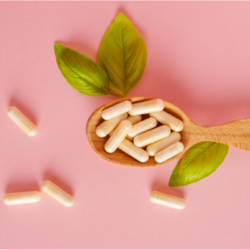
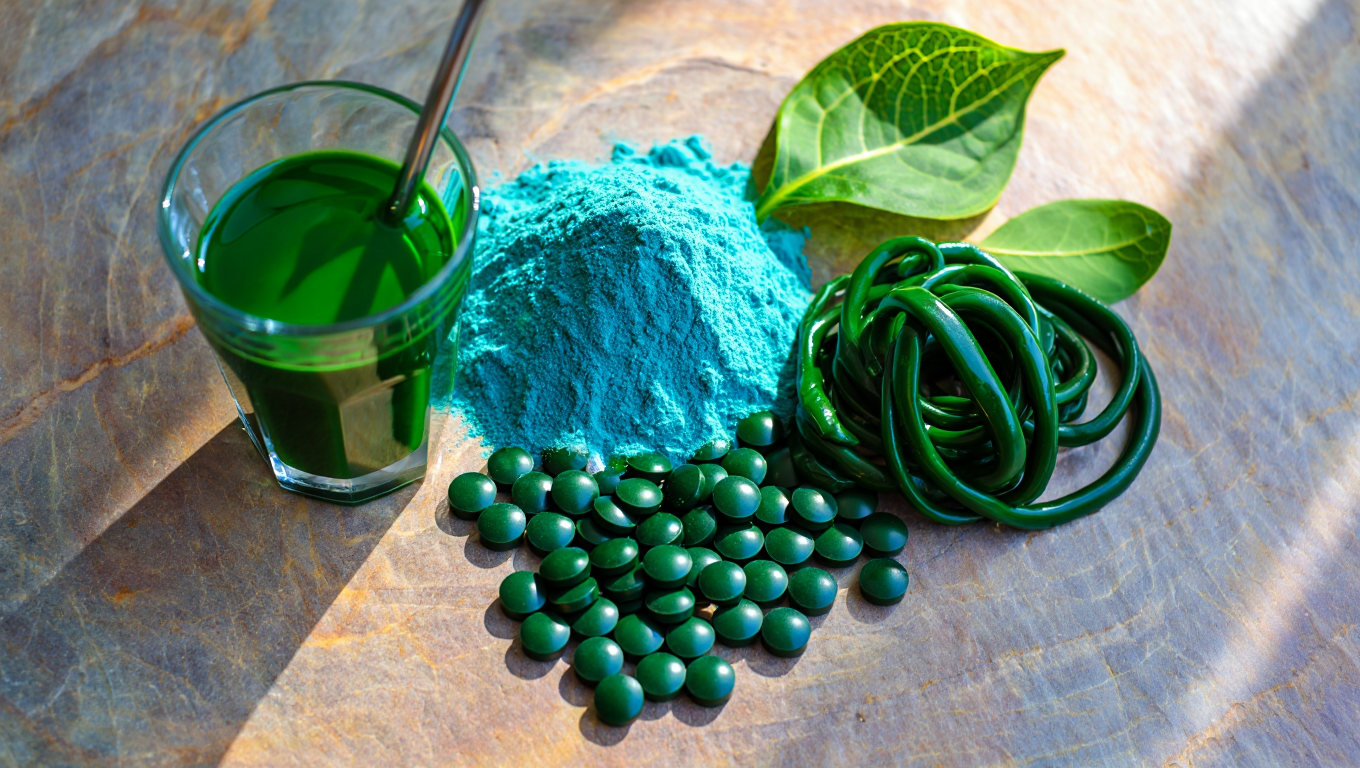
In pharmacies, spirulina is mainly available in tablets and capsules, and sometimes in powder form. These forms are practical, easy to dose and simple to incorporate into a daily routine.
Spirulina is also available in powder or flake form, which are less processed. These can be added to yoghurt, compotes, soups, fruit juices or smoothies. It is best to avoid cooking to preserve the nutrients. Combining spirulina with a source of vitamin C improves iron absorption. However, it is best to avoid tea and coffee when taking spirulina.
What is the recommended dosage of spirulina from the chemist?
As a dietary supplement, the recommended daily dose is usually between 1 and 5 g of spirulina per day, depending on the individual and the desired objective. It is therefore advisable to start with a small amount (around 1 g per day). The dose should then be increased gradually to limit any temporary digestive effects.
In practice, 3 to 5 g per day is often recommended for adults, taken in one or more doses, over a 1 to 3-month course that can be repeated throughout the year. In addition, it is generally preferable to take it during the day so as not to disturb sleep.
Why is it safer to buy spirulina from a chemist’s?
Spirulina has strong chelating properties and can concentrate heavy metals and pollutants if the water used for cultivation is contaminated. The problem therefore does not come from spirulina itself, but from poor production conditions. This is why it is important to choose supplements made from controlled crops, with regular analyses (heavy metals, bacteria, cyanotoxins).
In pharmacies, it is best to choose brands that are transparent about their origin, drying methods and quality controls. Well-regulated local or European supply chains are particularly attractive, both in terms of health safety and environmental impact.
What are the precautions and side effects of spirulina from pharmacies?
Although most users tolerate spirulina well, certain precautions are necessary. We do not recommend it for people with haemochromatosis, phenylketonuria, autoimmune disorders or a history of allergy to algae or cyanobacteria. We also recommend caution for people taking AVK or other anticoagulants. Similarly, patients taking immunosuppressants should seek medical advice before starting any treatment.
Side effects are rare and mainly include mild digestive problems, nausea or headaches at the start of treatment. They are usually temporary and decrease as the dose is adjusted. At the chemist’s, the chemist will assess your condition and current treatments and recommend the most suitable form and dosage, or advise against spirulina if necessary.
Spirulina: what advice does the pharmacist give?
In pharmacies, spirulina is always chosen based on the individual’s condition and current treatments. The pharmacist checks for contraindications (haemochromatosis, autoimmune diseases, anticoagulant or immunosuppressive treatments) before recommending a course of treatment.
They will recommend the most suitable form: tablets or capsules for easy intake, powder or flakes for those who prefer to add it to their food. Advice is also given on dosage and progression: start low and increase gradually. Finally, in most cases, the dose should be limited to 3–5 g per day.
Finally, the pharmacist helps you choose a safe spirulina product, sourced from controlled and analysed crops, so you can enjoy its benefits in complete safety.
Pharmacy spirulina: how to incorporate it into your diet?
Whether in powder or flake form, spirulina is very easy to incorporate into your daily diet without making any major changes to your habits.
It can be sprinkled on salads, cereal bowls, muesli, warm soups, vegetables or pasta. It also mixes very well in smoothies, fruit or vegetable juices, yoghurts and compotes. Just start with a small teaspoon and gradually increase the amount. To preserve its nutrients, it is best not to cook it and to add it just before serving. Combining it with a source of vitamin C (citrus juice, kiwi, red fruits, raw vegetables) promotes iron absorption. It is also best to avoid tea and coffee when taking it. Using spirulina from the chemist’s in this way allows you to turn a course of supplements into a real part of your daily nutrition. It is an enjoyable method that is easy to stick to over time.
Conclusion
Available in tablet, capsule, powder or flake form, spirulina from the chemist’s can easily be incorporated into a healthy lifestyle, either as a course of treatment or on a daily basis. Furthermore, by seeking advice from a pharmacist on product selection, dosage and contraindications, everyone can safely enjoy its benefits. This is true whether you are looking to boost your energy, immunity or enrich your diet naturally.
FAQs about spirulina
Spirulina raises many questions, whether about its nutritional value, its place in the daily diet or precautions for use in certain vulnerable people. These frequently asked questions will help you better understand how to safely incorporate spirulina into your life. This will allow you to get the most out of it while respecting your needs and health.
Can spirulina replace meat?
Spirulina is an excellent source of plant protein, but it cannot completely replace meat, as it does not provide all the essential amino acids in sufficient quantities. It is therefore important to vary your sources of protein on a daily basis. For a good balance, you can combine spirulina with legumes, whole grains and, if desired, other animal or plant proteins.
Can spirulina be consumed during pregnancy?
Spirulina, which is naturally rich in protein, iron and other micronutrients, can be beneficial during pregnancy as part of a balanced diet.
However, it is essential to seek the advice of your doctor or midwife before starting a spirulina supplement. This will allow you to check its origin, quality and suitability for your personal situation.
Is spirulina suitable for children?
Children can consume spirulina provided that the dose is adapted to their age, weight and nutritional needs.
It can help to meet part of their protein, vitamin and mineral requirements. However, it is still advisable to consult your paediatrician or doctor to determine the dosage and duration of treatment.
Can spirulina be consumed if you have thyroid problems?
Spirulina naturally contains minerals, and some products may contain varying amounts of iodine depending on their origin.
If you have thyroid problems (hypo- or hyperthyroidism, ongoing treatment), it is essential to seek advice from your doctor before taking spirulina, as an inappropriate intake of iodine can disrupt thyroid balance.