Written and medically reviewed by Arnaud, Doctor of Pharmacy and owner of Pharmacie Soin et Nature.
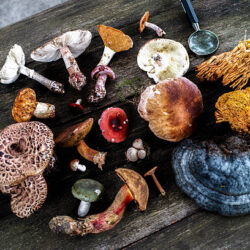
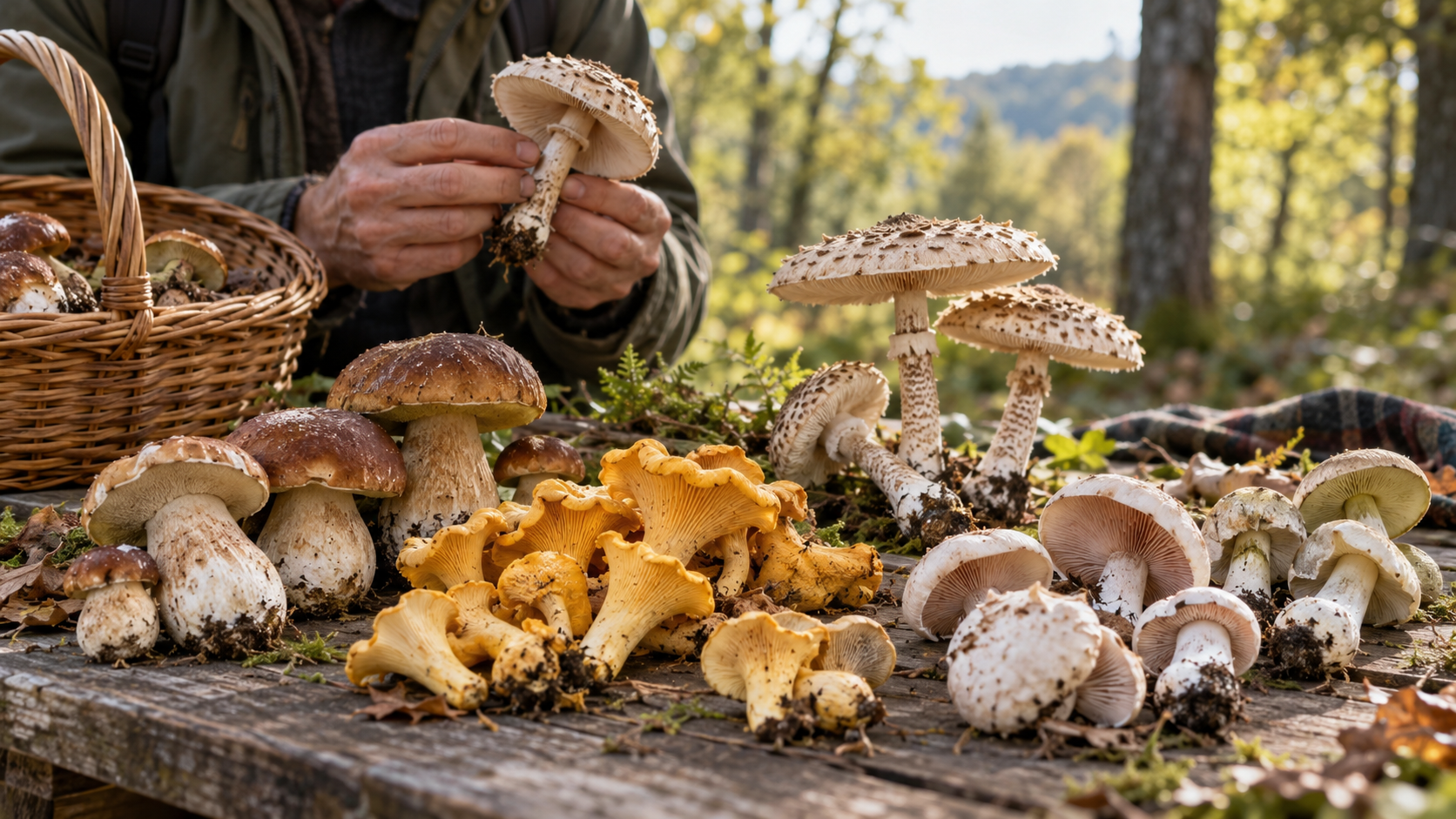
An edible mushroom is a species that can be eaten safely once it has been identified with certainty and properly cooked. The difficulty comes from its lookalikes: according to the French food safety agency Anses, most poisonings result from confusing a sought-after species with a poisonous one that resembles it. In this article, Arnaud, our pharmacist, presents the five most common mix-ups and the criteria that help avoid them. These pointers never replace a check by a competent person. To discover all the dangerous species, see our guide to poisonous mushrooms.
Why do edible mushrooms have poisonous lookalikes?
Foragers often set out looking for one particular species. They tend to recognise what they expect to find. The Anses report on the 2024 season in France lists the most frequent mix-ups:
| Edible mushroom | Poisonous lookalike | Warning sign |
|---|---|---|
| Parasol (Macrolepiota procera) | Death cap, small dapperlings (Lepiota) | Volva at the base of the stem, small size, fixed ring |
| Chanterelle (Cantharellus cibarius) | Jack-o’-lantern (Omphalotus olearius) | True gills, grows in clusters on wood or stumps |
| Cep (Boletus edulis) | Devil’s bolete (Rubroboletus satanas) | Red pores, swollen red stem, unpleasant smell |
| Field mushroom (Agaricus campestris) | Yellow stainer, white amanitas | Bright yellow staining when rubbed, gills that stay white |
| Fairy ring champignon and other small meadow mushrooms | Fibrecaps (Inocybe), funeral bell (Galerina marginata) | Brownish gills (fibrecaps), grows on dead wood (funeral bell) |
Parasol or amanita: how to recognise this edible mushroom?
The parasol is highly prized for its wide cap covered in brown scales. Yet it has formidable lookalikes. Small dapperlings look like miniature versions of it: several of them contain the same toxins as the death cap. Mycologists therefore advise never eating small dapperlings. As for the death cap, the presence of a volva gives it away, provided the mushroom was picked whole. A stem cut with a knife removes this decisive clue. You will find all its identification criteria in our article death cap and fly agaric: how to recognise them.
Chanterelle, an edible mushroom: how to avoid its false twin?
The jack-o’-lantern, found especially in southern Europe, grows at the foot of olive trees but also oaks or chestnut trees. It causes digestive symptoms that are sometimes severe. Its growth in tight clusters from a single point should raise the alarm: the chanterelle usually grows alone or in scattered groups, directly in moss or soil.
Cep, an edible mushroom: how to tell it from the devil’s bolete?
The devil’s bolete has a whitish to greyish cap that can look like a cep from above. The difference appears when you turn the mushroom over. It causes severe digestive symptoms with repeated vomiting. As a general rule, any bolete with red on its pores or stem should be left alone by inexperienced foragers.
Field mushroom, meadow mushrooms: what traps for this edible mushroom?
The yellow stainer (Agaricus xanthodermus) gives itself away with a bright yellow mark when the base of its stem is rubbed, along with a smell of ink or chemicals. It causes digestive problems. More seriously, the destroying angel (Amanita virosa) and the spring amanita (Amanita verna), entirely white, can be mistaken for young field mushrooms. Their gills stay white while their stem has a volva.
Several small edible meadow species, such as the fairy ring champignon, have dangerous lookalikes too: fibrecaps, responsible for muscarinic (sweating) syndrome, and the funeral bell, which grows on dead wood and contains amatoxins.
At the pharmacy, harvests brought in for checking often mix several species in the same basket. Yet a single fragment of a deadly species is enough to make the whole basket dangerous.
What else should you know to recognise an edible mushroom?
Is there a simple test to know if a mushroom is edible?
No. Neither a silver coin that turns black, nor slug bites, nor the smell or colour can tell you whether a mushroom is edible. Only precise identification of the species counts.
Can an app confirm that a mushroom is edible?
No. Anses strongly advises against using recognition apps to decide whether to eat a mushroom, because of a high risk of error. A photo shows neither the smell nor the base of the stem.
Should you cut or pull up the mushroom when foraging?
Pick the mushroom whole, gently loosening it from the ground. Cutting the stem removes the volva, an essential clue for spotting deadly amanitas.
Can an edible mushroom make you ill?
Yes. An edible mushroom that is too old, poorly stored, eaten raw or in excessive quantities can cause digestive problems. Anses recommends cooking wild mushrooms thoroughly and keeping them in the fridge for two days at most.
When should you seek help after eating a misidentified mushroom?
Call 112 or your poison centre as soon as the first symptom appears after a meal of mushrooms: nausea, vomiting, diarrhoea, trembling, dizziness or visual disturbances. Symptoms appearing 6 hours or more after the meal signal potentially serious poisoning. Find out the right reflexes in our article mushroom poisoning: symptoms and what to do.
Sources
- Anses (France), Accidental mushroom poisoning, toxicovigilance report (2024 season)
- Lille poison control centre, Lille University Hospital, Mushrooms and main toxic syndromes
- National Poisons Information Centre of Ireland, Mushroom safety advice