Written and medically reviewed by Arnaud, Doctor of Pharmacy and owner of Pharmacie Soin et Nature.
The death cap (Amanita phalloides) and the fly agaric (Amanita muscaria) are the two best-known amanitas in Europe, for very different reasons. The first, discreet, is responsible for most mushroom deaths in France. The second, with its red cap and white spots, is an icon of fairy tales, yet it is still poisonous. In this article, Arnaud, our pharmacist, helps you recognise these two amanitas, understand their effects on the body and know how to react. For an overview, see our guide to poisonous mushrooms.
How to recognise a death cap?
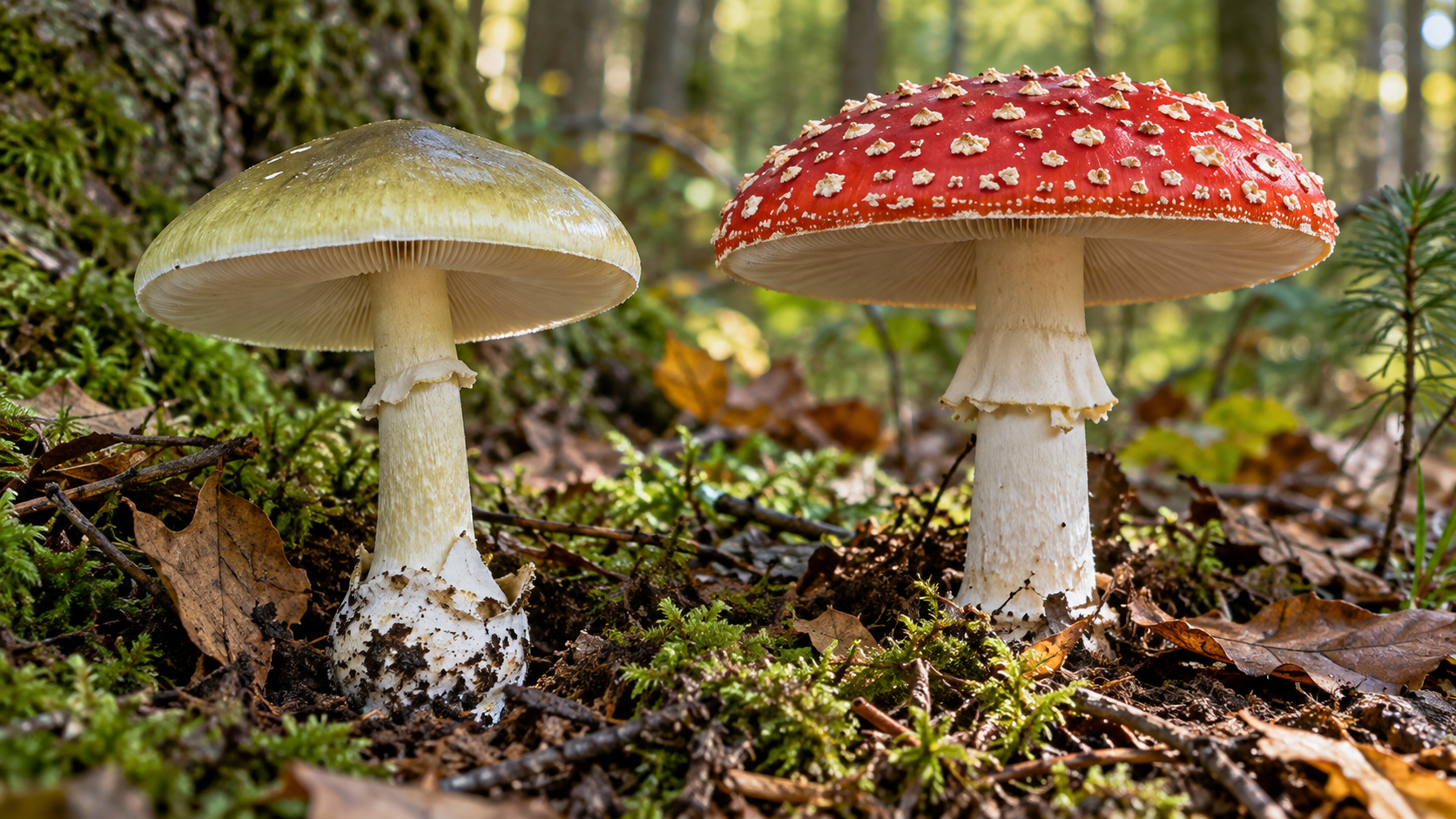
Its variable colour explains some of the confusion. Pale forms can be mistaken for field mushrooms, greenish forms for certain brittlegills (Russula). Its most reliable feature is the volva, hidden in the soil or dead leaves. A mushroom cut at ground level loses this distinctive sign. That is why mushrooms should always be picked whole. Its close relatives, the spring amanita and the destroying angel, entirely white, are just as deadly.
Why is the death cap so dangerous?
According to the Anses report on the 2024 season, the 3 deaths recorded in France were all linked to phalloides syndrome. This syndrome also accounted for more than half of the serious cases. The first symptoms generally appear 6 to 24 hours after the meal: vomiting, profuse diarrhoea, abdominal pain. A misleading lull may follow while the liver damage progresses. Treatment takes place exclusively in hospital.
How to recognise a fly agaric?
The white flakes decorating its cap are the remains of the veil that enveloped the young mushroom. Rain can wash them away, making the fly agaric harder to identify. A faded cap can then turn orange. At the base of the stem, the volva takes the form of concentric rings rather than a sac.
What are the effects of the fly agaric?
Its toxins, ibotenic acid and muscimol, act on the central nervous system. The panther cap (Amanita pantherina), with its brown cap covered in white flakes, causes the same syndrome, often more intensely. These poisonings require medical supervision. They are more dangerous in young children, who may be attracted by the bright colour of the cap. If amanitas grow near your home, see our article poisonous garden mushrooms: protecting children and pets.
| Feature | Death cap | Fly agaric |
|---|---|---|
| Cap | Olive-green to yellowish, sometimes whitish, smooth | Bright red to orange, white flakes |
| Volva | Sac-like, white | Concentric rings |
| Habitat | Broadleaf trees: oaks, beeches | Birches, conifers |
| Syndrome | Phalloides: liver damage | Pantherina: neurological effects |
| Onset of symptoms | Generally 6 to 24 hours | 30 minutes to 3 hours |
| Severity | Deadly | Poisonous, medical supervision needed |
What to do after eating a death cap or a fly agaric?
With the death cap, waiting for symptoms wastes precious time. If you suspect it was in a dish, call even if you feel fine. In the UK, call 999 or NHS 111. In Ireland, the Public Poisons Line is available on 01 809 2166 (8am to 10pm). Warn everyone who shared the meal.
At the pharmacy, the amanitas brought in for checking have very often been cut with a knife, which removes the volva. All the right reflexes are detailed in our article mushroom poisoning: symptoms and what to do.
What else should you know about the death cap and the fly agaric?
Is touching a death cap dangerous?
The danger of the death cap comes from eating it. Still, wash your hands after handling it, especially before touching other mushrooms or eating. Never mix a doubtful species with the rest of your harvest.
Does cooking make the fly agaric edible?
No. The fly agaric remains a poisonous mushroom. Preparation recipes circulate online, but they in no way guarantee the absence of toxicity. Never eat it.
Are there edible amanitas?
Yes, some amanitas are edible, such as Caesar’s mushroom (Amanita caesarea). They look so similar to deadly amanitas that non-specialist foragers should avoid all amanitas.
Why is it called the fly agaric?
Its name is said to come from an old practice: pieces of the cap were placed in sweetened milk to attract and stun flies. Above all, this popular name is a reminder of its toxicity.
When should you seek help after contact with an amanita?
Seek help immediately by calling 112 or your poison centre if an amanita may have been eaten, even in small amounts, by an adult or a child. For an animal, contact your vet without delay. With the death cap, do not wait for symptoms: their late onset delays treatment.
Sources
- Anses (France), Accidental mushroom poisoning, toxicovigilance report (2024 season)
- Lille poison control centre, Lille University Hospital, Mushrooms and main toxic syndromes
- French-speaking intensive care society (SRLF), Mushroom poisoning: what are the dangers?