Osteoarthritis is a mechanical condition that can affect any joint in the body. However, pain felt in the neck does not have the same mechanical cause, nor does it have the same impact on daily life as pain in the knee or lower back. To achieve real relief from osteoarthritis, a one-size-fits-all approach is therefore not enough. It is essential to pinpoint exactly where your stiffness lies. This will enable you to apply specific ergonomic, thermal and natural remedies. See how to adapt your habits. Also discover how to tailor your homeopathic remedies to your specific pain profile.
Cervical osteoarthritis: what is the solution for cervical osteoarthritis and neck tension?
Cervical osteoarthritis manifests as neck stiffness, cervicogenic headaches or dizziness when turning the head. Furthermore, the fragility of this area does indeed require special attention.
Homeopathic remedies targeting the cervical spine
- Actæa racemosa: This remedy is ideal for relieving upper cervical osteoarthritis, which is often accompanied by painful muscle tension in the trapezius muscles.
- Lachnantes: This remedy is specifically helpful for arthritic torticollis or a sensation of the neck being completely ‘stiff’ upon waking.
Posture and ergonomics in daily life
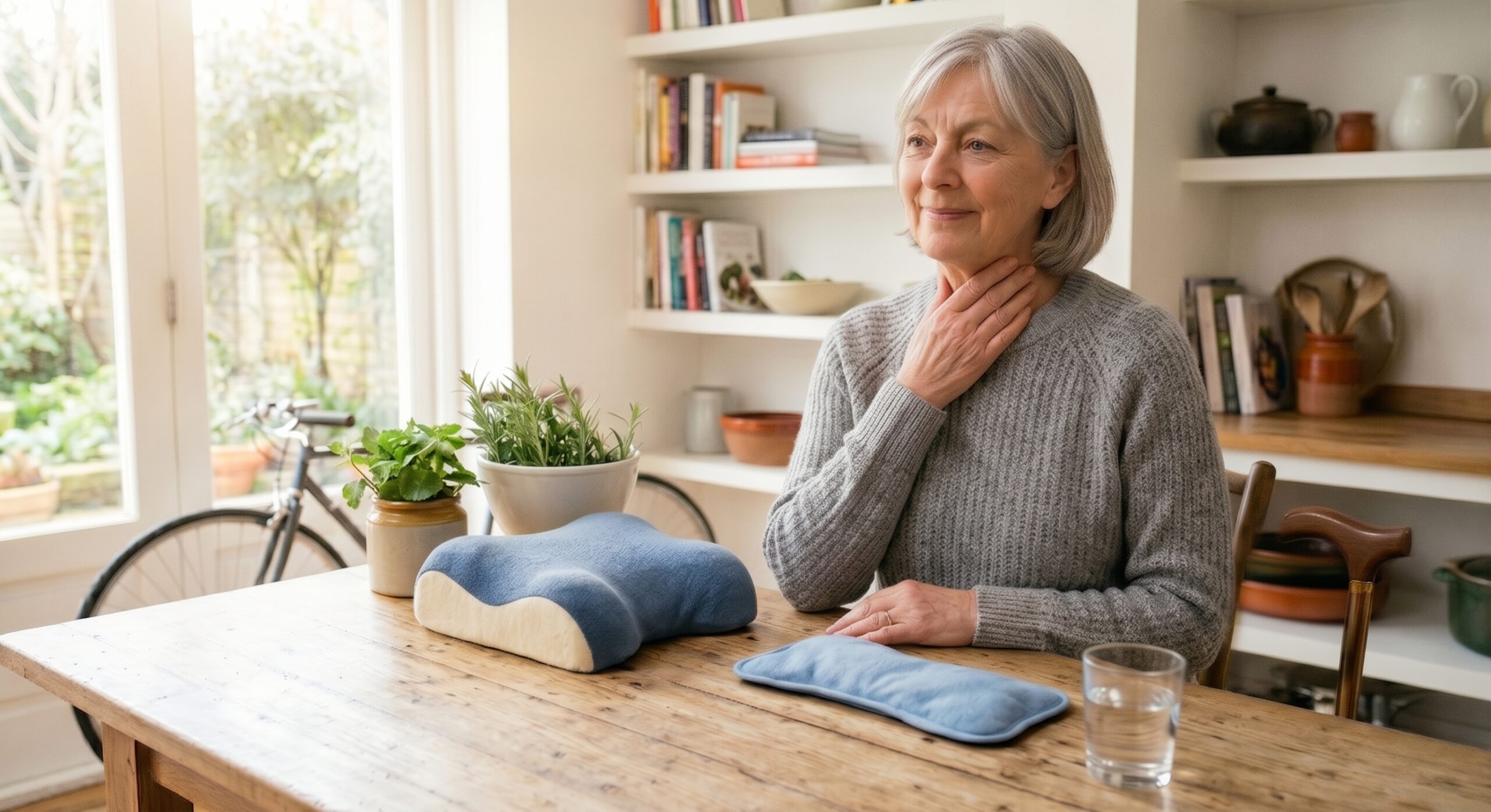
Avoid at all costs keeping your head bent forward for prolonged periods. This position is very common when using smartphones or tablets. At your desk, raise your computer screen so that it is perfectly level with your eyes. At night, the use of an ergonomically shaped pillow is strongly recommended. This will help maintain the natural alignment of your spine.
Lumbar osteoarthritis: what is the solution for osteoarthritis of the lower back?
Located at the very bottom of the spine, lumbar osteoarthritis severely impairs everyday movements such as bending down or standing. It is usually accompanied by very painful reflex muscle spasms.
The homeopathic approach to the spine
- Radium bromatum: This remedy is ideal for these weight-bearing areas, especially if you experience severe lower back fatigue with the uncomfortable sensation that your bones are about to give way.
- Kalium carbonicum: This remedy is ideal if lower back pain is accompanied by a feeling of general weakness and fatigue, particularly towards the end of the day.
Postural adjustments and heated lumbar belts
When picking up an object from the floor, always bend your knees whilst keeping your back straight. Do not stoop. When sitting for long periods, place a small cushion in the small of your back. This will help maintain the body’s natural curve.
Furthermore, wearing a standard lumbar support belt or a thermal lumbar support belt (such as Gibaud belts) provides valuable relief. It supports your posture without restricting your muscles. Furthermore, it provides continuous therapeutic heat. This heat instantly relaxes muscle tension.
Knee osteoarthritis: what solutions are there for knee osteoarthritis to help you keep walking?
The knee bears most of our body weight with every step. This is why knee osteoarthritis makes going down stairs, walking on uneven ground and bending particularly difficult.
Homeopathic remedies specifically for the knee
- Badiaga: Use this remedy if joint pain increases specifically when going up or down stairs.
- Heliantus: This remedy is recommended if the inflammation and pain are mainly concentrated in the left knee.
- Crocus: The remedy of choice if your knees make audible, uncomfortable cracking noises with every bending movement.
Knee braces and choice of footwear
It is essential to wear shoes with thick, shock-absorbing soles to reduce the shockwave that travels up the leg with every step. During a flare-up or during prolonged activity (gardening, walking),using an elastic fabric support knee brace (such as a Gibaud) stabilises the joint, provides a more secure step and relieves pressure on the cartilage.
Relieving pain locally is essential, but do not forget that weight-bearing joints such as the knee or lower back are directly affected by your weight. To reduce the mechanical load, always combine these tips with an anti-inflammatory diet and weight management.
Similarly, the thermal effect of belts or knee braces combines perfectly with the anti-inflammatory properties of herbal medicine and harpagophytum, or with a course of structural nutritional therapy supplements to nourish the cartilage from within.
There is therefore no single solution for osteoarthritis. On the contrary, there is a range of approaches tailored to each joint. By understanding the specific needs of your neck, lower back or knees, you can combine the right tools. This involves postural adjustments at the office and homeopathic remedies targeted at your specific pain patterns. It also involves the smart use of thermal support aids. Furthermore, this localised approach, combined with good nutrition and natural remedies for long-term management, is the key to maintaining your independence in the long term. This way, you’ll be able to move without pain.
Sources
- Vidal: recommendations on physical management and technical aids (orthoses, thermal belts) for osteoarthritis.
- Health Insurance (Ameli): practical guides on workplace ergonomics and the prevention of musculoskeletal disorders linked to cervical osteoarthritis.
- Cochrane: Clinical protocols for the use of medical devices for thermotherapy and support in chronic rheumatology.
FAQ – What is the solution for localised osteoarthritis: your frequently asked questions
How do I choose between a thermal belt and a knee brace to relieve my pain?
The choice depends entirely on the area causing the pain. If your daily life is hampered by stiffness upon waking or sharp pains in your lower back when standing, a thermal lumbar belt is an excellent option. If your pain tends to flare up when walking, on the stairs or when bending, a support knee brace will help stabilise the joint and relieve pressure.
What is the real impact of an ergonomic pillow on cervical osteoarthritis?
A standard pillow tends to raise the head too high or, conversely, allow it to sink in, creating a break or continuous strain on the cervical vertebrae for several hours. The ergonomic memory foam pillow moulds to the curve of the neck. It keeps the cervical vertebrae in line with the spine, allowing the muscles to relax and reducing morning stiffness.
Can you wear a Gibaud lumbar support or knee brace all day?
It is advisable to wear them during periods of activity (walking, housework, gardening, prolonged sitting at a desk) or during periods of severe inflammatory flare-ups to support the joint. However, avoid wearing them continuously whilst resting or at night (unless otherwise advised by a doctor). This will allow your deep muscles to work and prevent them from becoming slack.
How does sitting at a desk affect lumbar osteoarthritis?
Prolonged sitting tends to flatten the natural curve of the lower back (lordosis), which significantly increases the pressure on the intervertebral discs and the cartilage of the lumbar joints. By slouching, you increase the mechanical stress on your body. This accelerates wear and tear and triggers painful muscle spasms throughout the area.