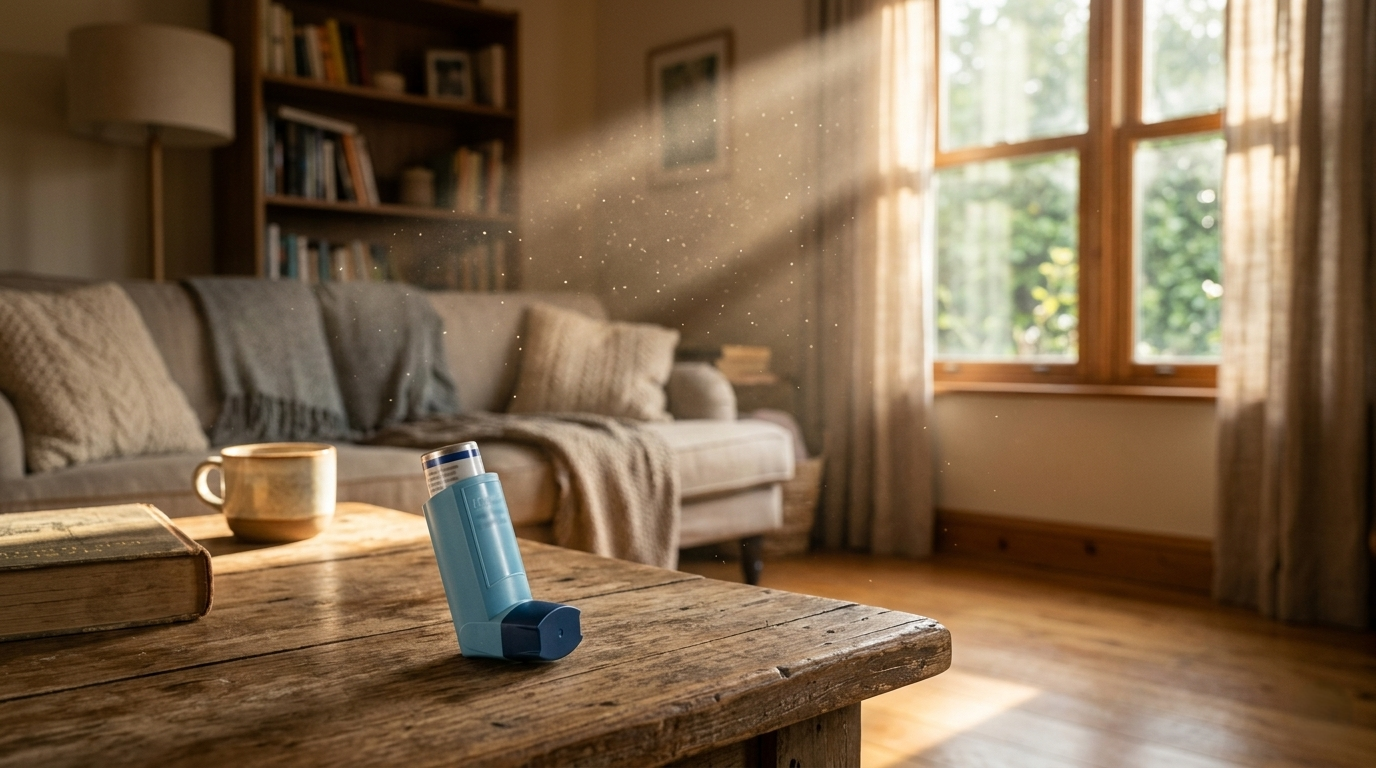
When you’re struggling to breathe, your first instinct is to reach for asthma medication (such as a bronchodilator inhaler). However, whilst these treatments are vital for reducing inflammation, they do not address the root cause of the problem.
Nearly 75 per cent of asthma cases in children and half of those in adults are allergy-related. Even before you reach for your medication, the most effective remedy is still to rid your environment of triggers. Here’s how to do it.
Why should you clean your home before taking asthma medication?
Our homes are full of invisible irritants that keep the airways in a state of chronic inflammation. If you don’t tackle the problem in your home, even the best asthma medication won’t work miracles in the long run.
Here are the main culprits to eliminate from your home:
- Dust mites and dust: These are the number one enemies. They thrive in bedding, carpets and old feather duvets. A thorough clean or the use of an anti-mite cover is often more effective than preventative treatment.
- Pets: Cats (saliva and fur) are major allergens, as are dogs and rodents. Be aware that the wind can blow fur back indoors, even if your pet lives in the garden.
- Fungi and mould: These thrive in ventilation ducts, poorly ventilated bathrooms or on houseplants. Their spores irritate the airways and trigger attacks that then require emergency treatment.
Climate and pollution: when asthma medication becomes essential
Outdoors, triggers are often beyond our control. During peaks in allergies or pollution, using your asthma medication is sometimes the only possible defence. An asthmatic’s airways react disproportionately to three external factors:
- Air pollution: Ozone, exhaust fumes and industrial smoke cause immediate bronchoconstriction. Passive smoking has the same effect, particularly in children.
- Pollen (hay fever): Grass, birch and cypresspollen are carried by the wind and spread everywhere in spring. Walks in the countryside in dry weather often trigger inflammation.
- Climate variations: Hot, humid climates encourage the proliferation of allergens. Sudden changes in temperature are also very difficult to tolerate. Conversely, the fresh mountain air is beneficial as it is free from dust mites.
Occupational asthma: change jobs or increase your treatment?
It is often overlooked, but an adult experiencing repeated attacks may be suffering from occupational asthma. Inhaling dust or chemicals all day long puts a strain on the airways.
Rather than increasing the dose of your asthma medication, it is sometimes urgent to review your working environment. Certain occupations are particularly at risk:
- Bakers (allergy to flour dust).
- Painters (chemical components in varnishes and isocyanates).
- Hairdressers (inhalation of hair dyes and hairsprays).
- Woodworkers (sawdust and fine particles).
In any case, prevention remains the best medicine. Improving your environment is the first step towards reducing the frequency of attacks and, with your doctor’s approval, lowering your dosage. Your asthma medication should remain a tool for managing your condition, not a stopgap measure when faced with a home full of allergens. To find out more or expand your knowledge:
- Back to the comprehensive guide to asthma
- Does food-induced allergic asthma exist, and which foods should be avoided?
FAQ: Your questions about the environment and asthma attacks
How can you get rid of dust mites to prevent asthma attacks?
To reduce your exposure to dust mites, air your home for at least 15 minutes a day, in both winter and summer. Wash your bed linen every week at 60°C, fit your mattresses with full-coverage anti-dust mite covers, and opt for vacuum cleaners fitted with a HEPA filter. You should also avoid carpets and old feather duvets.
What is the best climate for someone with asthma?
The ideal climate for an asthmatic is at high altitude (in the mountains). This is because the air there is drier and purer: dust mites and pollen are extremely rare. Conversely, hot and humid climates, or areas subject to significant temperature fluctuations, often exacerbate the condition by promoting mould growth.
Should you give up your pet if you have asthma?
The dander (hair, saliva, skin flakes) from cats, dogs or rodents is highly allergenic. If the allergy is confirmed by a medical test, living with the animal is strongly discouraged. If you already have a pet, strictly forbid it from entering bedrooms, wash your hands after every contact, and ventilate your home thoroughly.
Does making your home hypoallergenic mean you can stop taking your asthma medication?
No, you must never stop taking your long-term treatment on your own initiative. However, making your home a healthier environment (by eliminating dust mites, mould and pollutants) can significantly reduce inflammation in your airways. In the long term, and under the strict supervision of your pulmonologist, this healthy lifestyle may enable them to reduce the dose of your asthma medication.