Herbal tea is much more than just a pleasant drink. As defined by the French Pharmacopoeia, it is a genuine standardised medicinal preparation. This allows the water-soluble active ingredients to be extracted from medicinal plants. Therefore, to ensure therapeutic efficacy, the method of preparation must be strictly tailored to the part of the plant being used.
What is the difference between infusion, decoction and maceration in the world of medicinal herbal teas?
The choice of extraction method depends on the structure of the plant’s active ingredients and the sensitivity of its components to heat.
Infusion: the method for delicate parts
Infusion is the most common technique in herbal medicine. It involves pouring boiling water over the chopped plant and then leaving it to steep.
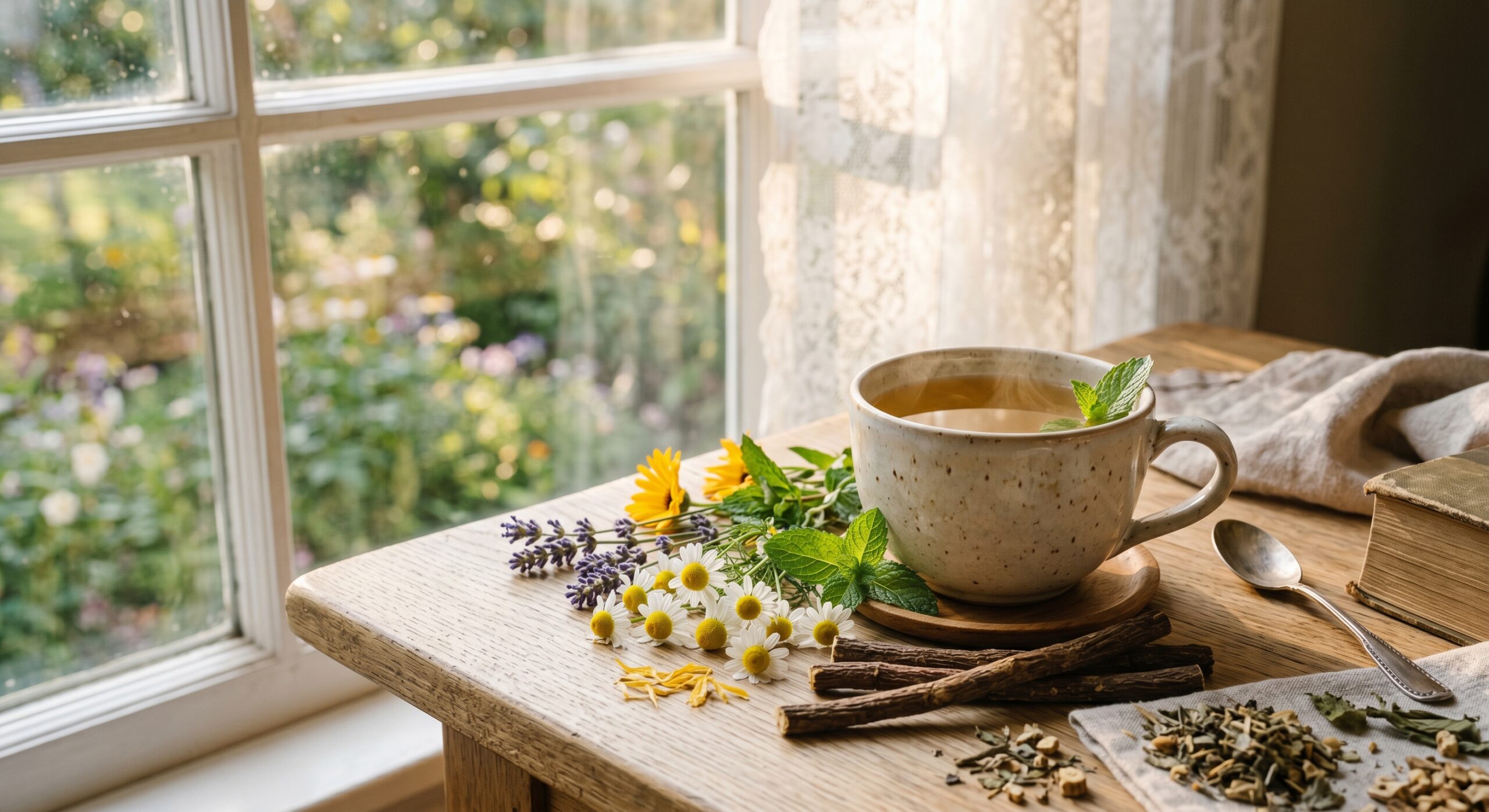
- Which plants are suitable? It is suitable for flowers, leaves and flowering tops (e.g. chamomile, mint, lemon balm). It is therefore ideal for plants rich in essential oils. These would evaporate if boiled for too long.
- Method: Pour simmering water over the plant (about one teaspoon per cup), cover to prevent the loss of volatile active ingredients. Then leave to infuse for 10 to 20 minutes before straining.
Decoction: extracting active ingredients from hard parts
A decoction is necessary when the active ingredients are trapped within woody or compact plant structures.
- Which plants? It is reserved for roots, bark, stems or rhizomes (e.g. liquorice, dandelion, oak bark).
- Method: Place the plant in cold water, bring to the boil and simmer for 15 to 30 minutes. After removing from the heat, leave to steep for a further 10 minutes before straining.
Maceration: preserving heat-sensitive active ingredients
Maceration involves leaving the plant in contact with water at room temperature for an extended period.
- Which plants are suitable? This method is preferred for plants whose active ingredients are destroyed by heat (heat-sensitive compounds). It is also used to avoid extracting undesirable components such as certain overly astringent tannins.
- Method: Leave the plant in cold water for 30 minutes to several hours (sometimes overnight for soft bark) before straining and consuming the macerate on the same day.
What are the rules for storing and dosing herbal teas?
A medicinal herbal tea must be prepared with precision to ensure its safety and pharmacological activity; this will ensure the expected results are achieved.
Dosage guidelines and blends
The French Pharmacopoeia and the EMA (European Medicines Agency) therefore recommend strict standards for officinal blends:
- Ideally, a mixture should not contain more than 10 different active plant ingredients.
- The active substances must account for the majority of the total weight. They must also possess complementary properties.
- Excipients are then added, where necessary, to improve the flavour (maximum of 3 plants) or visual appearance (maximum of 2 plants).
Storage and precautions
Unlike mother tinctures, aqueous preparations are fragile:
- Shelf life: An infusion can be kept for a maximum of 48 hours in the fridge. A decoction, however, can be kept for up to 3 days under the same conditions.
- Contamination: As the mixture is not boiled (as in the case of maceration), the risk of bacterial growth is higher. It is therefore advisable to consume these preparations quickly.
- Storing dried plants: Dried plants should be stored in a dry place, away from light and moisture, to prevent the active ingredients from oxidising.
Why is the quality of the water and the plants crucial for herbal tea?
The effectiveness of a herbal tea depends directly on the quality of the raw materials. In pharmacies, we therefore recommend the use of plants that meet Pharmacopoeia standards. These standards guarantee the absence of heavy metals and pesticides, and a minimum concentration of active ingredients (titration).
Similarly, water with low mineral content is preferred to optimise solubility. This also ensures maximum extraction of the polyphenols, minerals and vitamins (B and C) contained in the plants.
Warning: This guide is intended for general information only. The therapeutic use of medicinal plants requires precise knowledge of dosages. Always seek advice from your pharmacist to tailor the preparation to your specific needs.
The mother tincture is therefore the go-to dosage form for anyone wishing to benefit from the power of medicinal plants with great ease of use. Its high content of active ingredients, rapid absorption and long shelf life make it the solution of choice, both for prevention and as a long-term treatment.
However, its high concentration and alcoholic base require particular caution, especially among vulnerable groups. Prudent use, adhering to dosages and precautions, allows you to fully benefit from this concentrate of nature. For any personalised treatment, do not hesitate to seek your pharmacist’s expertise to ensure optimal therapeutic safety.
FAQ: How can you optimise the preparation of your medicinal herbal teas?
What is the difference between an infusion and a decoction?
The difference lies in the temperature and the duration of contact with the water. An infusion involves pouring boiling water over tender parts (flowers, leaves) and leaving it to steep. A decoction requires maintaining a boil for 15 to 30 minutes to extract the active ingredients from hard parts (roots, bark). The choice of method is crucial to avoid degrading the active ingredients.
Can herbal tea prepared several days in advance be kept?
The storage of aqueous preparations is limited due to the risk of bacterial growth and the oxidation of active ingredients. Thus, an infusion should be kept in the fridge for a maximum of 48 hours, whilst a decoction can be kept for up to 72 hours. However, it is recommended that you consume them on the same day to benefit from the full effectiveness of the vitamins and essential oils.
Why is it recommended to cover your herbal tea whilst it is steeping?
Covering the container is important, particularly for aromatic plants such as mint, thyme or lemon balm. This helps to condense the volatile essential oils that escape with the steam and allows them to fall back into the infusion. Indeed, without a lid, much of the plant’s antiseptic or soothing properties are lost.
How many plants can be mixed in a single herbal tea?
To ensure effective synergy and avoid interactions, the French Pharmacopoeia recommends not exceeding 10 plant-based active ingredients per blend. A balanced blend generally consists of plants with similar or complementary properties, supplemented by ‘adjuvant’ plants intended to improve the taste or visual appearance of the preparation.