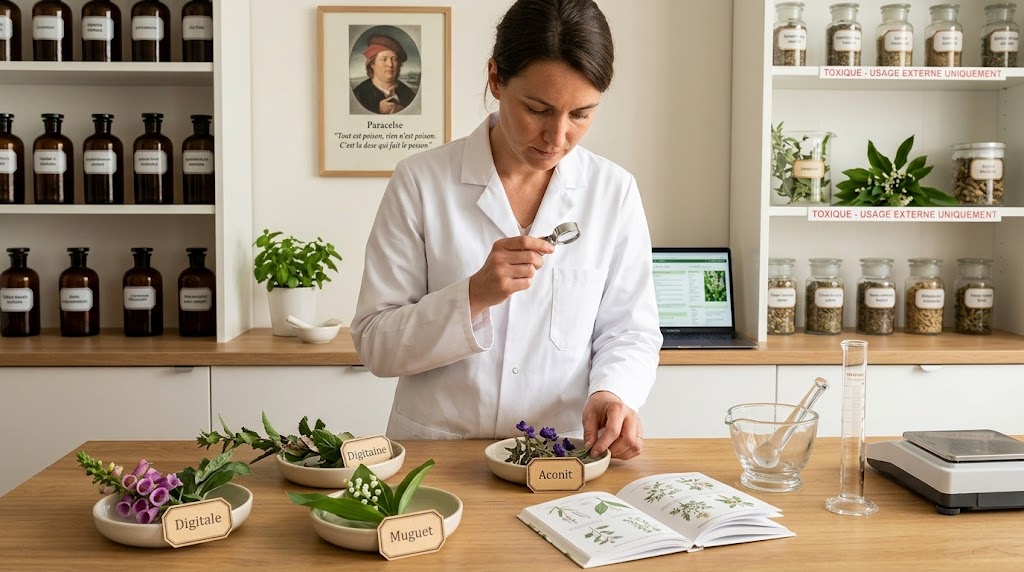
In herbal medicine, ‘natural’ does not mean ‘harmless’. Indeed, as Paracelsus once said: ‘Everything is poison; nothing is poison. It is the dose that makes the poison ’. Whilst medicinal plants offer valuable therapeutic solutions, around 10% of France’s flora is potentially toxic, and in some cases fatal. Understanding the risks and identifying dangerous species is therefore a crucial step in ensuring safe practice.
Why should one be wary of certain medicinal plants when self-medicating?
Poison control centres handle more than 250 calls a day, a significant proportion of which concern plant poisoning. These cases generally arise for three reasons:
- Botanical confusion: Accidental ingestion due to resemblance to an edible plant (e.g. mistaking lily of the valley for wild garlic).
- Lack of knowledge regarding dosages: The use of potent medicinal plants without observing toxicity thresholds (narrow therapeutic index).
- Vulnerability of certain groups: Children aged 0 to 4 are most at risk due to their low body weight.
Which medicinal plants are the most dangerous and what are their effects?
Certain plants, although listed in the pharmacopoeia, require extreme caution or are strictly reserved for external use.
Cardiac and respiratory toxins
- Monkshood: Often called “monkshood”, its root is lethal in doses as small as 2 grams. It causes dizziness and cardiac paralysis.
- Foxglove (Purple and Yellow): Although used in cardiology (digitalis), ingesting it directly dangerously slows the heart until it stops completely.
- Lily of the valley: Often confused with wild garlic, it contains cardiotonic glycosides that cause respiratory arrest.
- Oleander: Not to be confused with bay laurel. Ingestion causes a drop in heart rate and can be fatal.
Liver and neurological toxins
- Comfrey: Whilst excellent as a poultice or balm for bones, drinking it as a herbal tea is toxic to the liver (pyrrolizidine alkaloids).
- Belladonna and Datura: These poisonous plants cause hallucinations, dilated pupils and cardiac arrest.
- Pennyroyal: Its essential oil is strictly prohibited for internal use as it is highly hepatotoxic.
How can the risk of poisoning from medicinal plants be prevented?
Safety depends on a few golden rules that every user of herbal medicine must follow:
- Accurate identification: Never consume a plant you have picked unless you are absolutely certain of its botanical identity. Networks such as “Phytoliste” now help emergency services identify species from photographs in a matter of minutes.
- Pharmacy traceability: Always buy your medicinal plants from a pharmacy. This guarantees that they have not been adulterated or accidentally mixed with toxic species during harvesting.
- Respect for routes of administration: A plant may be curative when applied topically (e.g. arnica for bruises) but toxic, or even fatal, if ingested.
Phytotherapy is a demanding science. Whilst medicinal plants are our allies, they require strict pharmaceutical rigour and thorough botanical knowledge. Before starting a course of treatment, ensure that the chosen species is non-toxic and compatible with your state of health. In case of doubt or suspected ingestion, contact a poison control centre or your pharmacist immediately.
FAQ: Safety and proper use of medicinal plants
What should you do if you suspect plant poisoning? Do not induce vomiting or give the person anything to drink. Take a photograph of the remains of the plant and contact the poison control centre or dial 15 (emergency services) immediately.
Do all parts of a medicinal plant have the same toxicity? No. Sometimes, only the root is toxic (as with lily of the valley), whilst in other cases, it is the berries (belladonna, mistletoe) or the leaves that contain the dangerous active ingredients.
Can medicinal plants be used during pregnancy? The utmost caution is required. Many plants are abortifacient or teratogenic. Any use of medicinal plants by pregnant or breastfeeding women must be medically approved.
Does drying a toxic plant eliminate its danger? Rarely. For most species (such as foxglove or monkshood), the toxic metabolites remain active even after drying or cooking.