To complement the arsenal of herbal medicine, mineral and marine resources offer highly effective complementary therapeutic solutions. Among these resources, clay has held a prominent place for centuries. Whilst algotherapy draws on the nutritional richness of the oceans, clay therapy utilises the adsorbent properties of the earth to detoxify and thus relieve the body.
Why is clay therapy an ancient therapeutic practice?
Clay is a sedimentary rock formed by the erosion of volcanic rocks. Rich in aluminium, magnesium and calcium silicates, it has been used since ancient times for its antiseptic, anti-inflammatory and healing properties.
In galenic pharmacy, clay acts like a sponge. Indeed, it possesses both adsorption (it binds toxins to its surface) and absorption (it draws out inflammatory fluids) properties. It is therefore particularly effective for treating muscle pain, burns, insect bites and even certain digestive disorders.
What are the different types of clay and their specific properties?
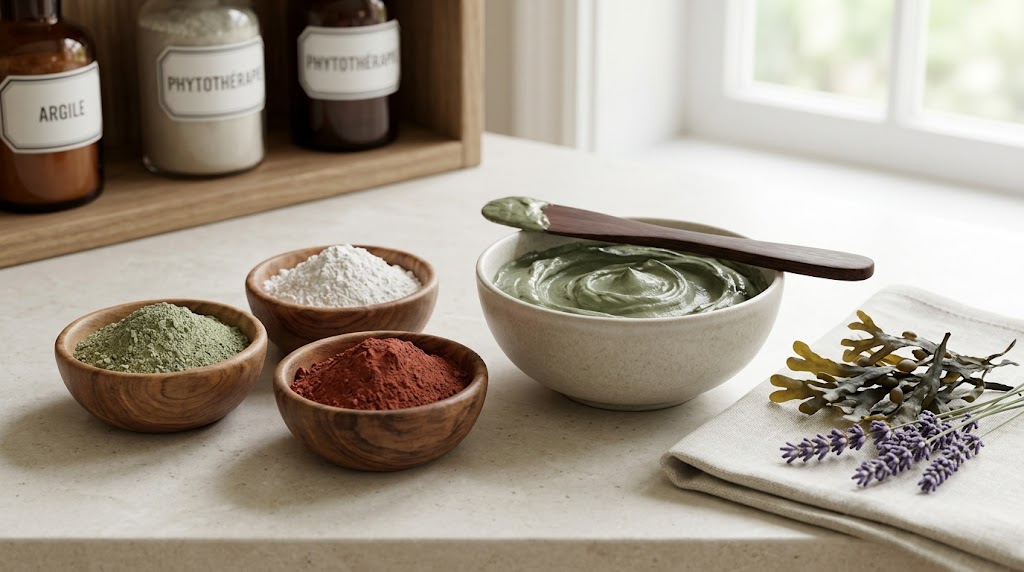
Each type has a unique mineral composition, identifiable by its colour, which determines its therapeutic use in clay therapy:
- Green clay (Illite or Montmorillonite): The most versatile. It is a powerful remineraliser and anti-inflammatory. It is used as a poultice for rheumatism or taken orally for gastrointestinal disorders.
- White clay (Kaolin): Gentle and rich in aluminium, it is ideal for sensitive skin. It has a soothing effect, combats perspiration and is used in oral hygiene.
- Red clay: Its high iron content makes it an ally against anaemia and helps stimulate blood circulation (giving a healthy glow).
- Yellow and pink clay: With cleansing and healing properties, they are ideal for the cosmetic care of delicate skin.
- Rhassoul: This Moroccan clay is the go-to choice for regulating oily skin and hair thanks to its powerful degreasing properties.
How does algotherapy complement the action of clay?
Whilst clay purifies through mineralisation, seaweed acts as a concentrated form of seawater. Acting as natural filters, they absorb vitamins, amino acids and trace elements from the marine environment.
- Detoxification: Seaweeds such as Fucus vesiculosus stimulate perspiration, helping to eliminate toxins whilst promoting weight loss thanks to their iodine content.
- Remineralisation: Hot seaweed wraps (kelp) promote blood circulation and allow minerals to penetrate the skin barrier.
- Anti-inflammatory action: Algae therapy is a key component of thalassotherapy for treating chronic joint pain, perfectly complementing the local action of a clay poultice.
The combination of marine and mineral treatments offers a holistic approach to natural health. Whether through the internal or external use of clay to purify the body, or through seaweed therapy to remineralise it, these simple and 100% natural methods strengthen the body’s defences. These techniques can be combined with plant-derived substances. As with any therapeutic practice, ensure the purity of your raw materials and seek advice from your pharmacist.
FAQ: Everything you need to know about using clay therapy in daily life
How do you prepare an effective clay poultice?
Mix the powdered clay with water (preferably low in minerals) in a glass or earthenware container. Avoid using metal, as it can alter the rock’s ionic properties. Apply a thick layer to the area to be treated and leave it on until the clay begins to dry.
Can you drink it to treat stomach problems?
Yes, white or green clay (ultra-fine, ultra-ventilated grade) can be consumed as ‘clay water’. It helps regulate stomach acidity and neutralise intestinal toxins. However, take care not to consume it at the same time as any medication, as it may absorb the active ingredients.
Are there any contraindications to clay therapy?
Internal use of clay is not recommended in cases of chronic constipation, intestinal obstruction or severe hypertension. For external use, avoid applying it to very deep wounds without medical advice.
Why is clay said to be ‘intelligent’?
In herbal medicine, clay is believed to possess a form of selectivity: it appears to be drawn to inflamed areas to draw out pus, gas or toxins, whilst supplying the mineral salts necessary for tissue repair.