
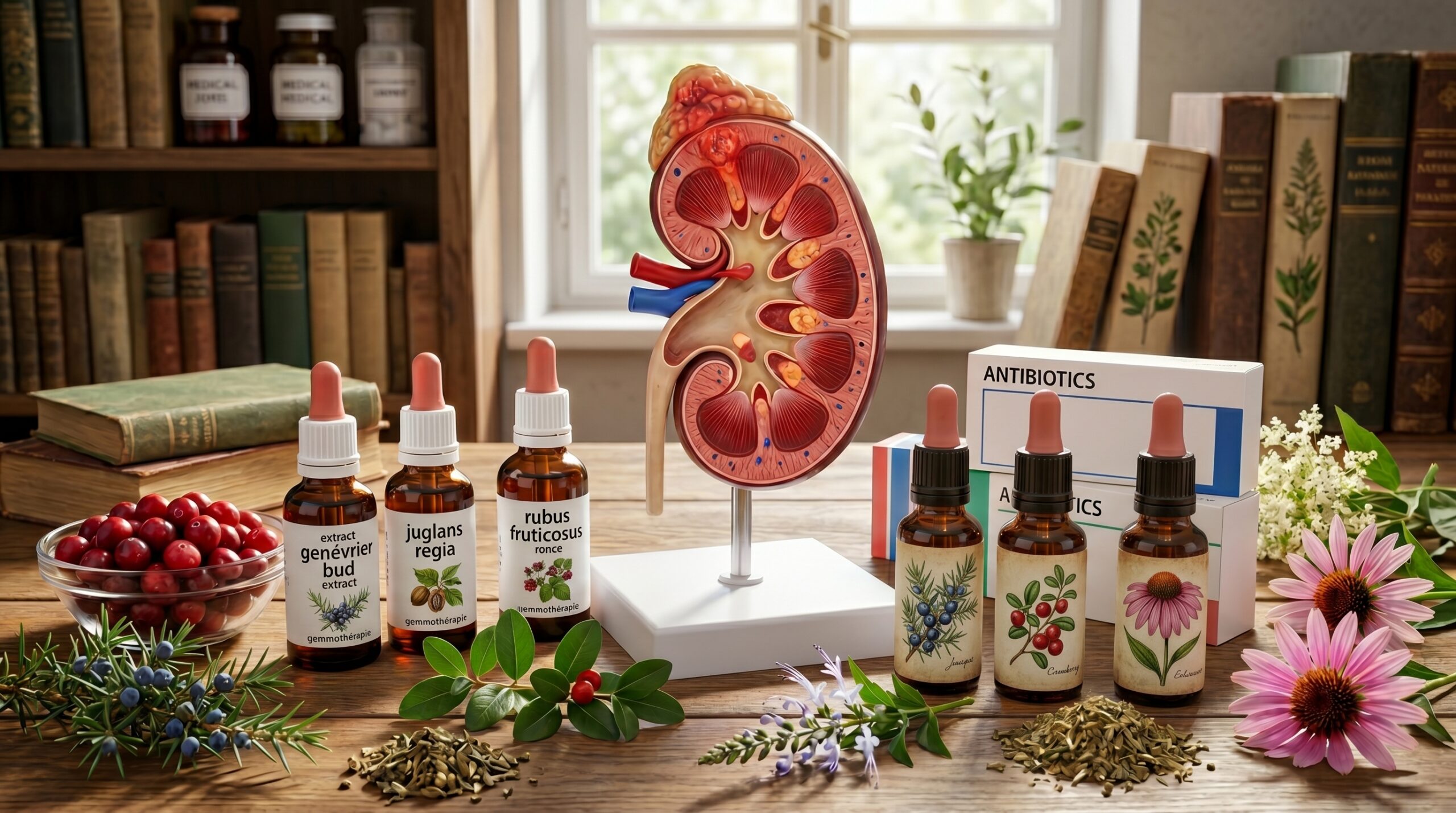
Herbal medicine can be seen as a valuable complement to the treatment of pyelonephritis. However, it is essential to remember that herbs are not a substitute for conventional medical treatment. During the acute phase, antibiotics are essential to clear the infection. Herbs are used here to help relieve symptoms and thus promote a lasting recovery.
Which herbs for the kidneys should be used in gemmotherapy?
Gemmotherapy uses buds and young shoots, which are rich in active ingredients. To support kidney health, three options stand out:
- Juniper (Juniperus communis) bud: This is the ultimate renal drainer. It stimulates the kidneys and has a diuretic effect. It helps eliminate urea and uric acid. It is therefore valuable in cases of chronic pyelonephritis.
- Walnut bud (Juglans regia): Recommended for chronic suppuration of the urological mucous membranes, it helps to reduce inflammation following a severe infection.
- Bramble bud (Rubus fruticosus): Working in synergy with beech, this kidney-supporting plant addresses the after-effects of chronic interstitial nephritis.
Which kidney-supporting plants should be prioritised among standardised plant extracts (SPEs)?
EPSs allow for strict control of the potency of the active ingredients. Here are the most effective plants for cleansing and draining:
- Cranberry: An essential choice, it prevents E. coli bacteria from adhering to the urinary tract walls and thus acidifies the pH to inhibit their growth.
- Bearberry: This powerful urinary antiseptic contains arbutin, which can directly disinfect the urinary tract.
- Orthosiphon and Pilosella: These kidney-supporting plants increase diuresis (water elimination) and promote the expulsion of nitrogenous waste and small kidney stones.
- Meadowsweet: It offers a dual diuretic and anti-inflammatory action, useful for reducing oedema and water retention.
- Echinacea: It acts here to strengthen the immune system against bacterial attack.
How does aromatherapy complement the use of herbs for the kidneys?
Aromatherapy uses essential oils for rapid, targeted anti-infectious action, but their potency requires caution.
- Juniper essential oil: It protects the renal filter and stimulates urinary excretion. It is recommended for massage when diluted (30%) on the kidney area.
- Ceylon cinnamon essential oil: This is a major anti-infective. It acts as a powerful anti-E. coli agent to neutralise severe urinary tract bacteria.
Caution: These oils are contraindicated in pregnant women and must always be diluted due to their potential toxicity or causticity.
Read more:
- Comprehensive guide to acute pyelonephritis: The main feature
- Treatment and prevention: Everything you need to know about comprehensive management
Sources
- https://www.urofrance.org/patient/pathologies-urologiques/cystites/
- https://www.vidalfrance.com/fonctionnalites/base-de-toxicologie
- https://www.ema.europa.eu/en/medicines/herbal/uvae-ursi-folium
FAQ: Safety and proper use
Can plants for the kidneys be used during pregnancy? The utmost caution is required. Many plants are abortifacient or teratogenic. Any use by pregnant or breastfeeding women must be medically approved.
Does drying a toxic plant eliminate its danger? Rarely. For most species (such as foxglove), the toxic metabolites remain active even after drying or cooking.
What should you do if you suspect plant poisoning? Do not induce vomiting. Take a photograph of the remains of the plant and contact the poison control centre or dial 15 immediately.