Topical application plays a fundamental role in herbal medicine. Whether to soothe inflammation, promote healing or treat a skin condition, applying plants directly to the skin allows for targeted and rapid action. This approach bypasses first-pass metabolism in the liver. It therefore relies on carefully prepared formulations: oil macerates, ointments and poultices.
Why are medicinal oil infusions essential for skincare?
The oil infusion, or oil macerate, forms the basis of many natural remedies. The oil acts as a solvent to capture the fat-soluble active ingredients of the plants.
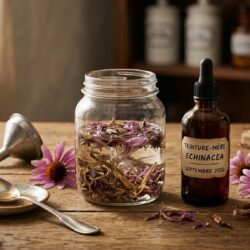
Cold oil infusion
This gentle method preserves the integrity of the most delicate components. It involves leaving plants to macerate (250g dried or 500g fresh for 500ml of vegetable oil such as sweet almond or grapeseed oil) in a glass jar for around a fortnight in a sunny spot. The natural heat of the sun then activates the extraction process without denaturing the active ingredients needed for skin care.
Hot oil infusion
Ideal for quicker preparation or for hard plant materials, this is carried out in a bain-marie. The plants are gently heated in the oil for two hours over a low heat. This method is therefore preferred for making therapeutic massage oils or protective ointments.
What is the difference between an ointment and a cream for skincare?
In galenic pharmacy, the distinction between these two forms is crucial to ensure optimal absorption of the plant-based active ingredients.
The herbal ointment: a protective barrier
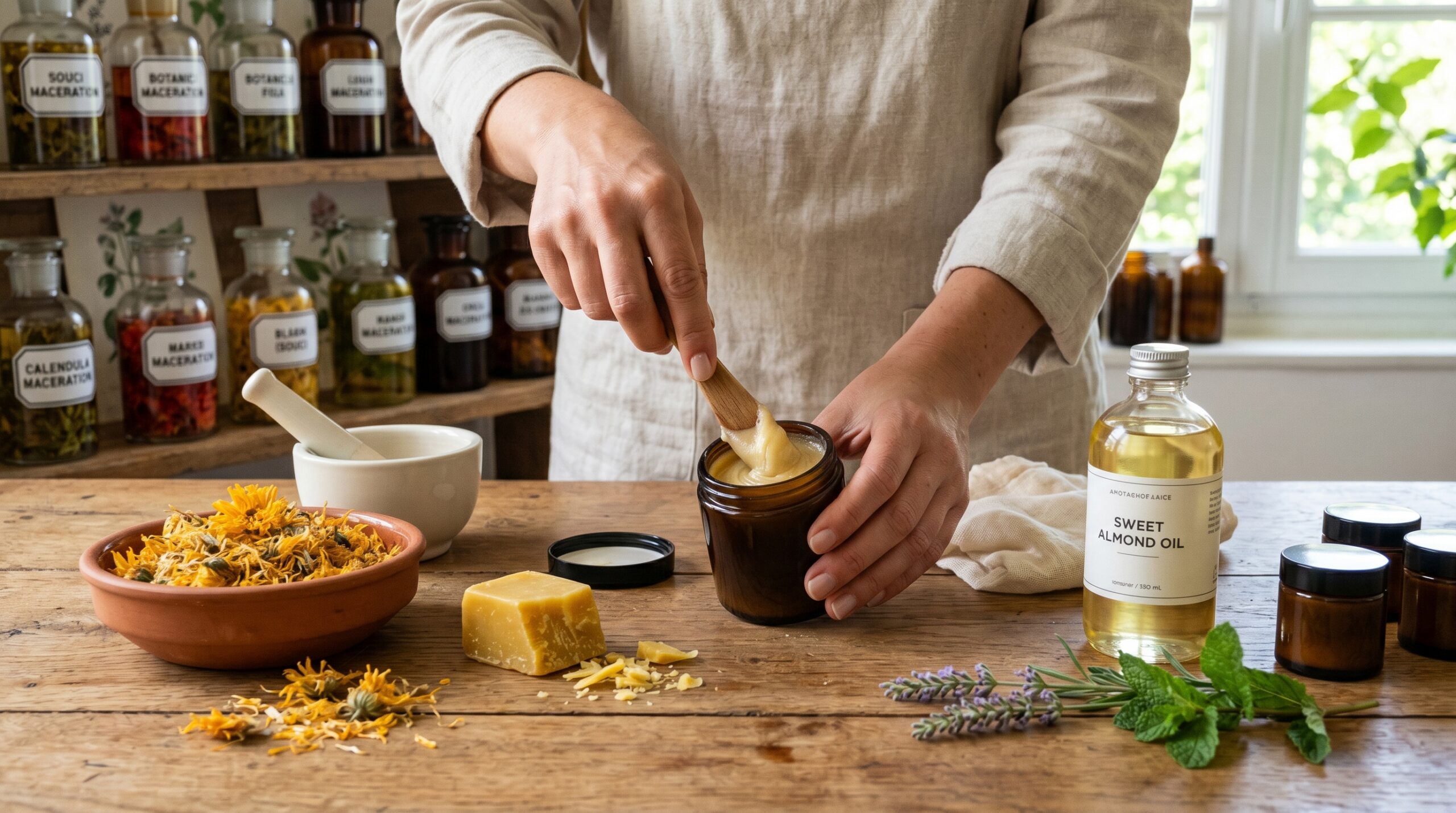
An ointment is a semi-solid, anhydrous (water-free) preparation, composed of lipids and waxes. Its rich texture forms an occlusive layer on the skin, essential for skin care in cases of cracks or areas of intense dryness. To prepare it, 25g of beeswax is generally used for 10cl of medicinal oil.
Ointment: combined moisturisation
Ointment follows a similar principle but may incorporate an aqueous phase, facilitating its penetration into the deeper layers of the dermis. Plants such as burdock or plantain are often added to soothe sensitive skin. The choice of base oil is therefore crucial for a bespoke skincare treatment: castor oil for an intensive effect, or sweet almond oil for the face.
How should compresses and poultices be used for targeted skincare?
These two traditional methods allow for the intensive application of plant-based active ingredients to a specific area of the body.
- Compresses made from plant extracts: Soak a clean cloth in an infusion or concentrated decoction. They are mainly recommended to reduce inflammation. They also make an excellent skincare treatment for relieving minor joint pain or irritation.
- Natural poultices: Unlike compresses, poultices use the plant material itself, chopped and heated. For example, ginger poultices are renowned for their benefits for the joints, whilst comfrey poultices aid skin repair.
The topical application of plants therefore offers a range of highly effective natural solutions. Whether it is a protective ointment or an anti-inflammatory poultice, the success of the skincare treatment depends on the quality of the preparation and adherence to hygiene rules. For any persistent skin condition, it is essential to consult a healthcare professional to obtain an accurate diagnosis.
FAQ: Frequently asked questions about herbal skincare
How long does a homemade ointment keep?
As ointments contain no water, they are stable and can be kept for several months when stored in a dark glass jar, in a cool place and away from light.
Can a poultice be applied to an open wound?
Caution is advised. For an open wound, use sterile compresses soaked in antiseptic decoctions approved by a pharmacist to prevent infection.
Why is a bain-marie recommended for hot oil infusions?
A bain-marieallows for precise temperature control. Direct heat could burn the plants and denature the vegetable oils, rendering the skincare product ineffective or even irritating.
Is coconut oil suitable for all ointments?
Coconut oilcan have a drying effect on certain skin types and solidifies at room temperature. For facial skincare, more fluid oils such as argan or sweet almond are often preferable.