Written and medically reviewed by Arnaud, Doctor of Pharmacy and owner of the Soin et Nature Pharmacy.
With the rise in respiratory conditions, many patients are looking for gentle ways to soothe their airways. This approach is taken as a complement to their medical treatment.
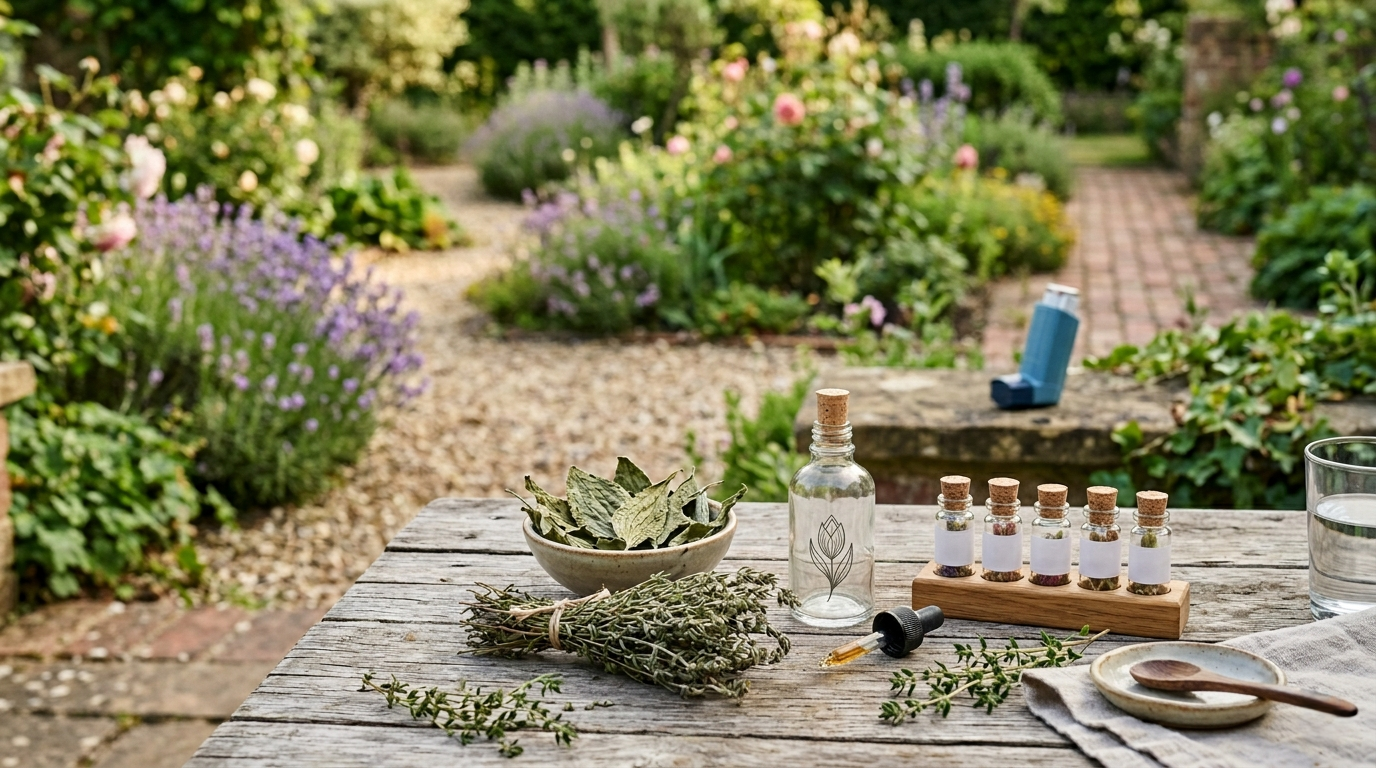
Whilst they are never a substitute for an emergency inhaler, herbal remedies for asthma can be a useful complementary aid as part of long-term management, provided they are used under supervision. They are traditionally used to support respiratory comfort. Furthermore, they can help promote nervous system relaxation and contribute to reducing the frequency of attacks. Here are the most well-documented species, and how to use them safely.
What are the best herbs for allergic and inflammatory asthma?
Bronchial hyperreactivity is, above all, an inflammatory condition. To support those with allergic tendencies, certain plants are traditionally used for their soothing effects on the respiratory tract. However, they do not have a sedative effect.
Here are four plants for asthma to consider in cases of an inflammatory condition. They should always be taken alongside medical treatment and after consulting a healthcare professional.
- Plantain (Plantago major):a plant traditionally associated with the respiratory system, used as a mother tincture or as a prolonged infusion; the method of use (dosage, duration of treatment) must always be determined in consultation with a pharmacist or herbalist.
- Boswellia serrata (frankincense): its resin is being studied for its effect on leukotrienes, molecules involved in bronchoconstriction. An older clinical trial (1998, small sample size) reported an improvement in symptoms in the majority of patients after several weeks of treatment; this result remains isolated and therefore warrants confirmation by more recent studies. (Not recommended for pregnant women, on the advice of a pharmacist.)
- Ginger: traditionally recognised for its beneficial effects on general inflammatory comfort. To be consumed grated in a hot infusion or in syrup form. (Caution: may irritate the stomach in sensitive individuals.)
- Chinese Sweet Bramble (Rubus suavissimus): its leaves contain tannins traditionally used to support respiratory comfort in cases of marked allergic predisposition. (Caution: its high tannin content may cause constipation.)
Which herbs are best for nervous asthma and night-time attacks?
Asthma often causes profound stress, particularly due to the fear of shortness of breath. This stress can then perpetuate a vicious circle: anxiety leads to bronchial tension, which in turn can trigger an attack — a phenomenon often reported in the middle of the night.
To help relax the nervous system, herbs with soothing and traditionally sedative properties are regularly used: thyme, hawthorn, lemon balm, lavender or lime blossom, taken as a mild herbal tea at the end of the day.
Good to know: as with any herbal treatment taken regularly, it is recommended that you take breaks (therapeutic intervals) and seek advice from your pharmacist to adapt the frequency to your situation, particularly in the case of children, pregnant women or if you are currently undergoing medical treatment.
A word of caution: certain plants known for their direct bronchodilator effect (such as Euphorbia, traditionally used in some countries) must under no circumstances be considered during an asthma attack without strict medical supervision — their uncontrolled use may therefore delay essential emergency treatment.
Gemmotherapy: which plant buds should you choose for asthma?
Gemmotherapy uses bud macerates, which are young shoots containing concentrated active ingredients from the plant. It is a gentle method that should be used in consultation with a professional, including for children.
Four specific buds are traditionally associated with respiratory comfort. They are always used as glycerine macerates. Furthermore, you should seek advice from your pharmacist regarding the dosage best suited to your individual circumstances.
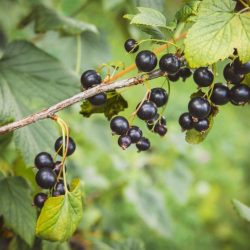
- Blackcurrant (Ribes nigrum): traditionally recognised for helping to support the body’s general anti-inflammatory response.
- Mancian viburnum (Viburnum lantana): traditionally used to support the relaxation of the pulmonary nervous system.
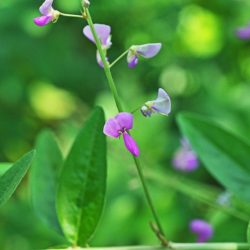
- Desmodium: traditionally associated with supporting respiratory and liver health.
- Norway spruce (Abies pectinata): traditionally used to support lung health.
Nature for support, medicine for safety: incorporating herbs for asthma into your routine can help support your respiratory wellbeing on a daily basis, but should never replace your ongoing medical care. Always speak to your doctor or pharmacist before starting a course of treatment. This will ensure there are no interactions with your current treatments and allow you to receive a personalised dosage. To find out more about certain aspects of asthma:
- Back to the comprehensive guide to asthma
- Which homeopathic remedy should you choose for prevention or during an asthma attack?
FAQ: Your questions about herbal remedies for asthma
Can herbal remedies for asthma replace Ventolin?
No. When used under pharmaceutical supervision, herbal remedies address the underlying condition and support day-to-day respiratory comfort. In the event of an acute attack, only the fast-acting bronchodilator treatment prescribed by your doctor will provide appropriate management. No herbal remedy should be used as a substitute.
Which herbal remedy has the most research supporting its use for allergic asthma?
Plantain and Boswellia serrata are among the most widely studied plants in relation to respiratory comfort in allergy sufferers, particularly due to their traditional use in managing inflammation. You should therefore discuss these options with your pharmacist, who will be able to advise you on the most suitable form and method of use for your situation.
Can essential oils be used to relieve asthma?
This is not recommended without specialist advice. Essential oils contain powerful volatile compounds which can irritate the bronchial tubes and potentially trigger breathing difficulties when inhaled, particularly in people with asthma. It is best to avoid diffusers and opt instead for herbal teas, dried plant capsules or bud macerates, always following your pharmacist’s advice.
Are herbal remedies for asthma suitable for children or pregnant women?
Certain herbs require special precautions for children and pregnant women (this is particularly the case with Boswellia). It is therefore essential to seek advice from a pharmacist before starting any course of treatment in these situations.
When should you consult a doctor or pharmacist about your asthma?
It is recommended that you seek advice without delay if you experience an attack that does not respond to your usual bronchodilator treatment, if you experience increasing shortness of breath, if you find it difficult to speak, or if attacks become more frequent despite your long-term treatment. Your pharmacist is also a local point of contact for any questions regarding the combination of herbal remedies and your current medical treatment.