Written and medically reviewed by Arnaud, Doctor of Pharmacy and owner of Pharmacie Soin et Nature.
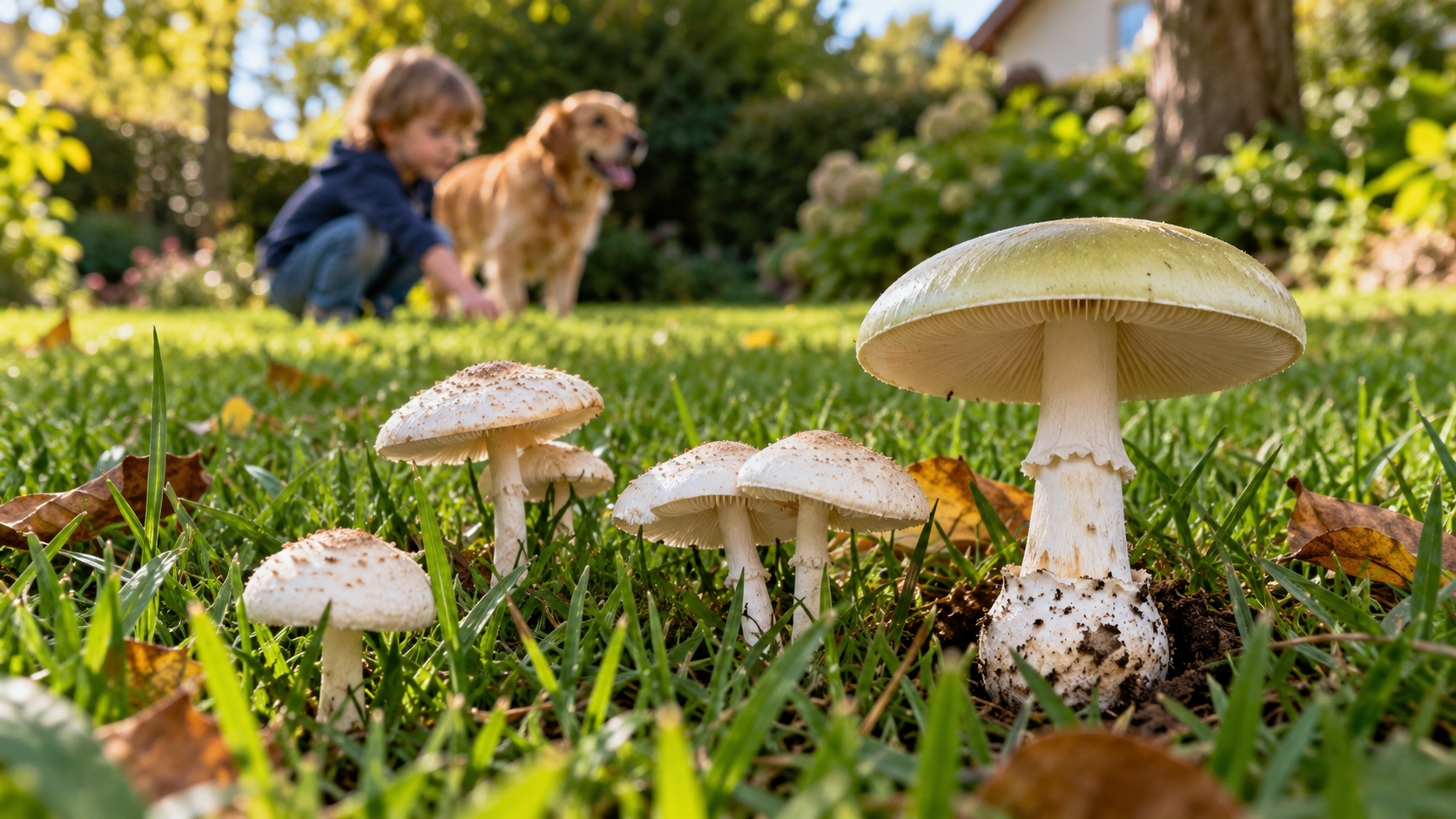
Poisonous garden mushrooms are dangerous species that grow in a lawn, a flower bed, a meadow or at the foot of trees on private land. After a spell of rain, they can appear overnight, within reach of children and pets. In this article, Arnaud, our pharmacist, presents the species to watch for, the risks for young children and dogs, and the right steps to take. For an overview, see our guide to poisonous mushrooms.
Which poisonous garden mushrooms grow in lawns?
A garden offers mushrooms everything they need: moisture, organic matter, tree roots, mulch or wood chips. The species present depend on the soil and neighbouring trees. Here are those that call for the most vigilance:
| Poisonous garden mushroom | Where to find it | Main risk |
|---|---|---|
| Small dapperlings (Lepiota) | Lawns, flower beds, path edges | Serious liver damage for some species |
| White funnel mushrooms (Clitocybe) | Lawns, meadows, often in rings | Muscarinic syndrome: sweating, tears, slowed heart rate |
| Fibrecaps (Inocybe) | Under trees, lawn edges | Muscarinic syndrome |
| Yellow stainer (Agaricus xanthodermus) | Lawns, parks, hedges | Digestive problems |
| Death cap (Amanita phalloides) | At the foot of oaks, beeches or hazels | Deadly liver damage |
How to recognise a poisonous white mushroom in the garden?
White mushrooms pose a particular problem. White funnel mushrooms often grow in rings in lawns, among edible species such as the fairy ring champignon. The spring amanita and the destroying angel, entirely white, are deadly. The field mushroom, on the other hand, has pink then brown gills, never white. Other frequent mix-ups are detailed in our article edible or poisonous mushrooms: the lookalikes to know. In a garden, the safest rule is to eat no mushroom without a check by a competent person.
Are poisonous garden mushrooms dangerous for children?
According to the Anses report on the 2024 season, 55 children under 10 were poisoned by mushrooms in France. During the growing season, check the lawn before letting a toddler play. Remove the mushrooms with gloves or a bag, then throw them away with household waste rather than in the compost. Explain to older children that mushrooms are not to be touched without an adult.
At the pharmacy, parents who call us after a child has chewed a garden mushroom often do not know which species was involved. Keep a whole specimen of the mushroom: it will be used for identification. Call 112 or your poison centre straight away. In the UK, call 999 or NHS 111. In Ireland, the Public Poisons Line is available on 01 809 2166 (8am to 10pm).
What to do if your dog ate a poisonous garden mushroom?
Dogs are exposed to the same toxins as humans. The death cap can be fatal for them too. Vomiting, diarrhoea, heavy drooling, trembling, agitation or lethargy should raise the alarm after a walk or time spent in the garden. As in humans, some serious symptoms appear late. Bring a whole specimen of the suspect mushroom to the vet, or failing that, a photo.
How to limit poisonous garden mushrooms?
- Check the lawn after each spell of rain during the growing season.
- Remove the mushrooms with gloves, then wash your hands.
- Limit moisture by avoiding overwatering and the build-up of dead leaves on the lawn.
- Keep an eye on your dog during walks in the forest as well as in the garden.
What else should you know about poisonous garden mushrooms?
Can you eat the mushrooms that grow in your garden?
Only after certain identification by a competent person. A garden can host both edible and deadly species. Lawns treated with pesticides should be avoided in all cases.
Is touching a poisonous garden mushroom dangerous?
The main danger comes from eating it. Still, use gloves to remove them, then wash your hands, especially before eating or touching a child.
Do garden mushrooms mean there is a problem with the lawn?
Not necessarily. They mainly indicate soil that is rich in organic matter and moist. They often appear after the rains of late summer or autumn.
Can a poisonous garden mushroom kill a cat?
Cats rarely eat mushrooms, but the same toxins affect them. If in any doubt, contact your vet with a specimen or a photo of the mushroom.
When should you seek help after eating a poisonous garden mushroom?
Seek help immediately, without waiting for symptoms. For a child or an adult, call 112 or your poison centre. For an animal, contact your vet. If possible, bring a whole specimen of the mushroom involved.
Sources
- Anses (France), Accidental mushroom poisoning, toxicovigilance report (2024 season)
- Lille poison control centre, Lille University Hospital, Mushrooms and main toxic syndromes
- National Poisons Information Centre of Ireland, Mushroom safety advice